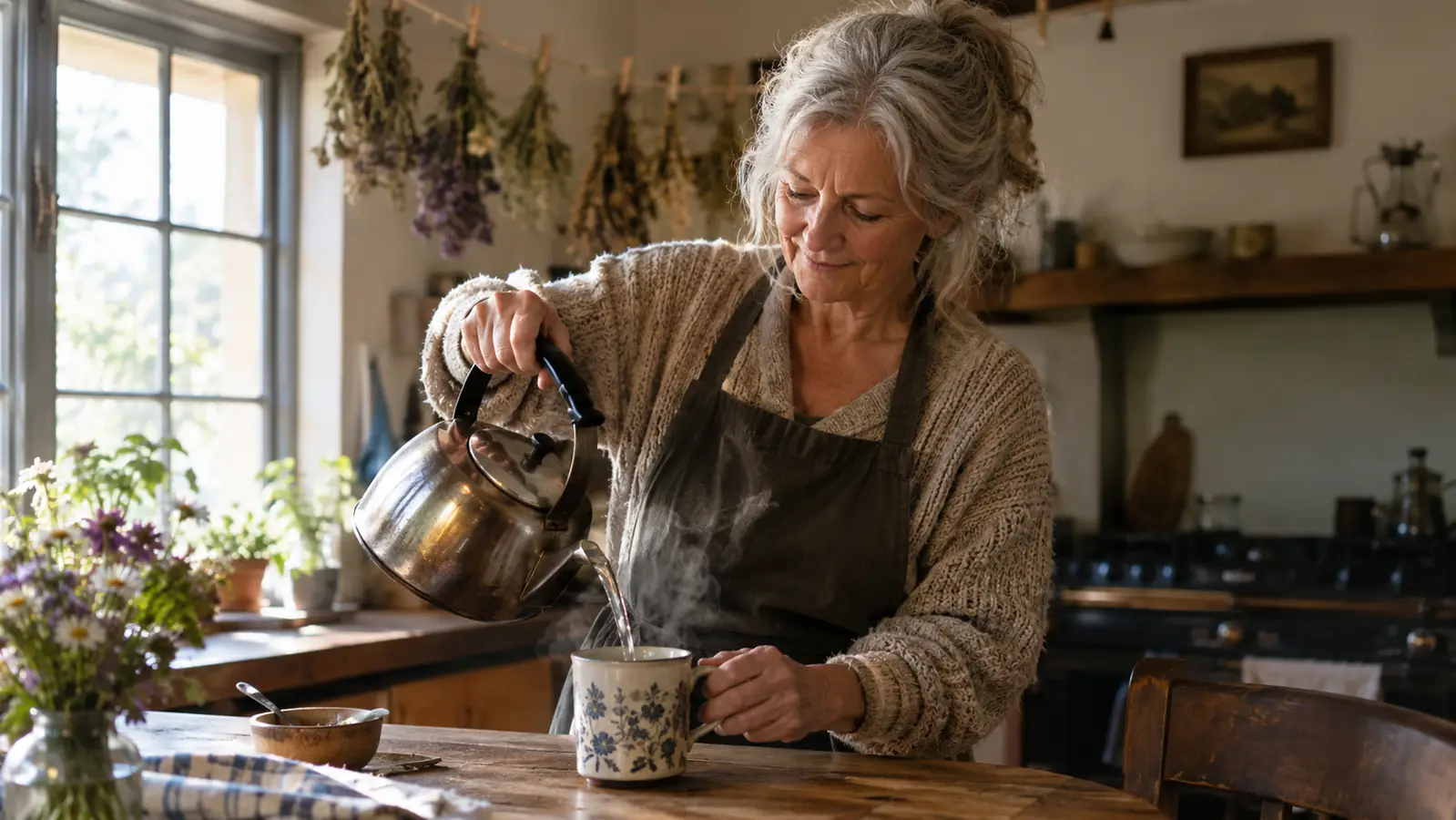
Somewhere around the third year of growing my own herbs, I figured out why so many cups of herbal tea disappoint. It is almost never the tea. It is the brewing. Most of us boil water, dunk a bag for thirty seconds, and then wonder why the cup tastes like hot water with a vague memory of a plant. I did that for years, and I blamed the tea, then I blamed myself. What finally changed things was watching my grandmother put a saucer on top of her cup and walk out to the garden for five minutes. When she came back, the same tea that had tasted weak to me tasted like something. These days I keep a box of Celestial Seasonings Herbal Tea Sampler in the cupboard for the evenings when I want something ready without stepping out to the garden, and it brews beautifully when I treat it the way I treat my own dried herbs.
This is the method I actually use at home, the same one I use for the chamomile, peppermint, and lemon balm from my own beds. It is not complicated, and it does not require a single piece of special equipment. What it does require is a little patience and a few small habits. If you have been underwhelmed by every mug of herbal tea you have tried, start here, because the problem was probably never you.
Want variety without growing a garden? Start with a sampler.
The Celestial Seasonings Herbal Tea Sampler Variety Pack gives you 18 caffeine-free tea bags in a range of flavors, so you can find the ones you love before you commit to a full box. It is the same tea I keep in my own cupboard for nights when the garden is too far away.
Amazon Check Today's Price on Amazon →Why Most Herbal Tea Tastes Like Hot Water
Before we get to the steps, it helps to know why the tea you remember was probably not your fault. Most commercial tea bags sit on a shelf for a year before they reach your cup, and stale herbs taste like dust no matter how long you steep them. The other common culprit is the brew itself: water that is not hot enough, a bag that is pulled out too early, or a cup that was left open while the good oils drifted away.
The good news is that none of this requires a degree in botany or a cabinet full of equipment. It just requires a few habits, and the first cup you brew with them will taste different from the ones that came before. I have brewed the Celestial Seasonings sampler for three friends who swore they did not like herbal tea, and every one of them asked what I did differently. The answer was never the tea. It was the method.
You will also notice I do not talk about fancy teapots or temperature-controlled kettles. I own a plain enamel kettle that my grandmother bought before I was born, and it makes a fine cup every single time. If you want to spend money on equipment, spend it on better tea, because that is where the flavor actually lives. The method below is the one I use for a grocery store box of tea bags and for the chamomile I dry myself on the back porch.
Step 1: Start with Fresh Water, Just Off the Boil
The water matters more than people think. If your tap water tastes like chlorine, your tea will taste like chlorine with a little herb in it. I fill the kettle with fresh cold water and let it run a moment first. Filtered water works well too. The goal is a clean base that lets the herb speak. Stale water that has been sitting in the kettle overnight makes a flat cup, so I empty the kettle when I finish in the morning.
Temperature is the second half of the water question. For herbal tea, the water should come to a full boil, then sit for about thirty seconds before you pour. That brings it down to just below boiling, which is hot enough to open up the leaves and flowers without scalding them. If the water is still bubbling hard when it hits the leaves, it can bruise the delicate parts of the plant. That short rest keeps the cup smooth instead of harsh. Green and white teas need cooler water, but we are talking about herbal tea here, and herbal tea likes it hot.
If you own a kettle with a temperature setting, use the herbal setting if it has one. If you own a plain stovetop kettle like mine, do not worry about it. Bring the water to a boil, let it rest, pour. The water should be hot enough that it steams when it pours, but calm enough that it does not roar. That is the whole temperature lesson.
Step 2: Use Enough Tea for the Size of Your Cup
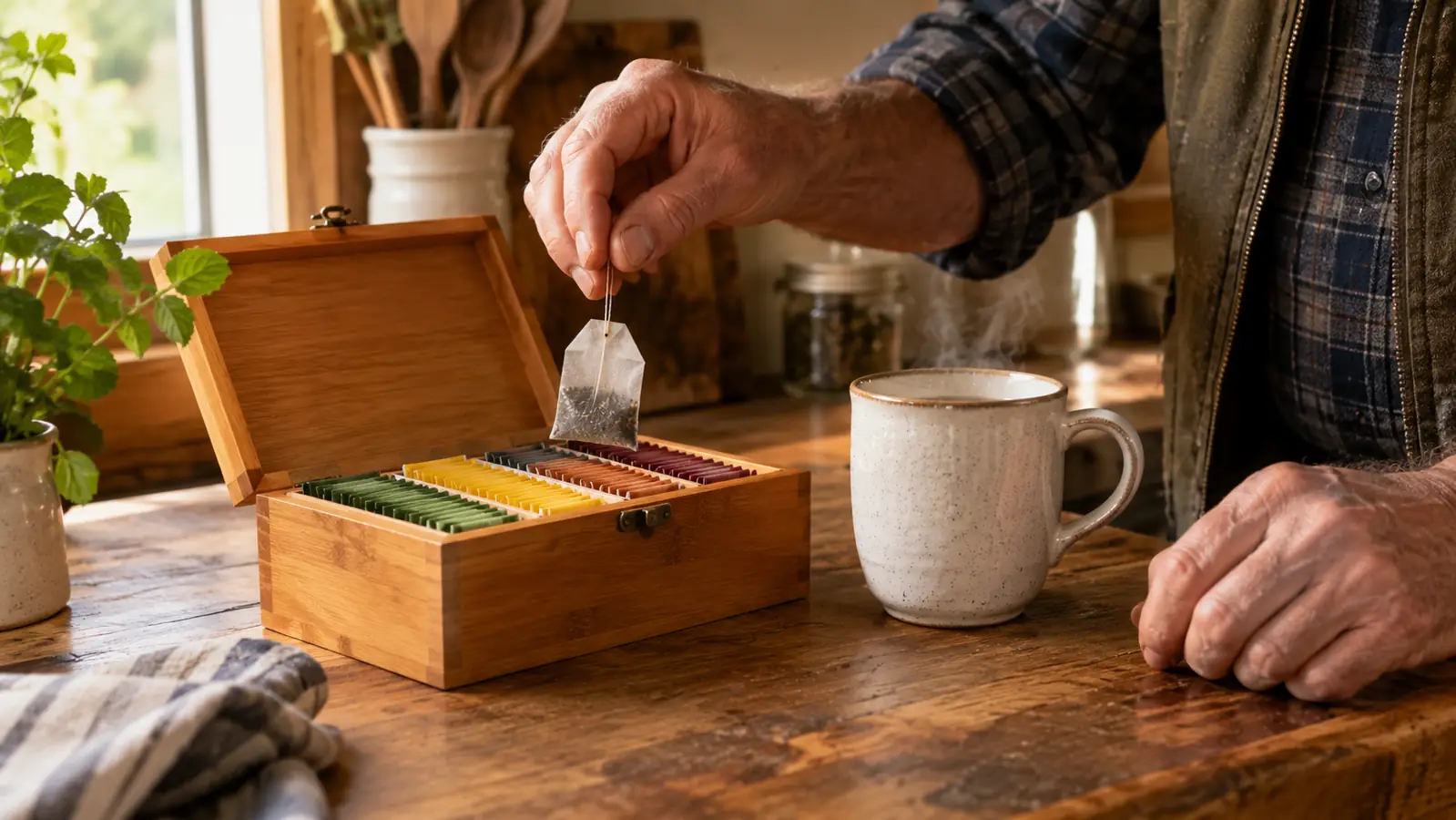
The second reason herbal tea comes out weak is simple math. One tea bag is made for about eight ounces of water, and most mugs hold more than that. The package says one bag per cup, and it means a standard eight-ounce cup, not the size of whatever mug is closest to your hand. If you fill a big mug to the brim, you are watering down the tea before you even start.
For the Celestial Seasonings sampler, one bag per standard mug is right. For a large mug, use two bags, or brew one bag in a smaller cup and top it off with hot water. With loose herbs from my garden, I use about a tablespoon per cup, a little more for chamomile because the flowers are light and fluffy. Chamomile especially looks like almost nothing in the spoon and then fills the whole cup with flavor.
When in doubt, start with the amount on the package and adjust from there. You can always add a little hot water to a strong cup. You cannot un-brew a weak one. Taste is personal, and the only wrong answer is a cup you do not want to finish.
Step 3: Steep It Covered, and Give It Time
Here is the step most people skip. Cover the cup while the tea steeps. The aromatic oils that carry the flavor and the comfort evaporate into the air if the cup is left open. A small saucer, a tea cozy, or a lid on the teapot keeps those oils in the cup where they belong. It looks like a small thing, but it is the difference between a cup that smells like a garden and a cup that just tastes warm.
Then give it time. Herbal tea is not black tea. It needs five to seven minutes to release what it has. I set the timer for six and walk away. When I come back, the water has turned a deep amber and the kitchen smells like the garden. The color is a good guide. When the water has taken on a deep color and the steam smells sweet, the tea is ready.
For the Celestial Seasonings sampler, I find five to six minutes gets the best cup. Longer than eight minutes and some of the bolder flavors can turn slightly bitter, so there is a sweet spot. Taste it at five minutes, then decide if it needs another minute. Some evenings I use the timer on the stove, some evenings I use the one on my phone. The point is to stop guessing.
Step 4: Take the Bag Out, Then Taste Before You Add Anything
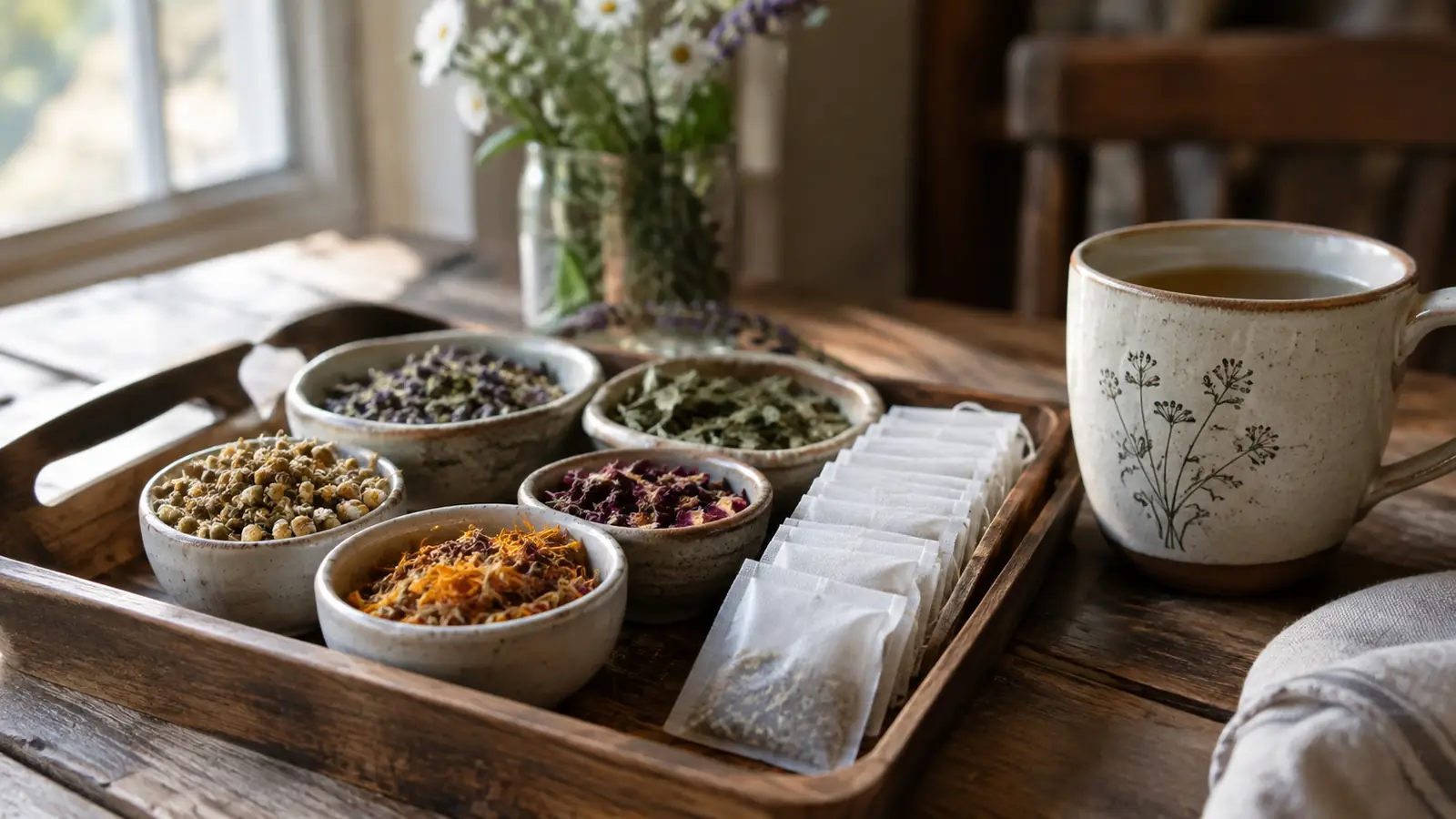
When the time is up, take the bag out. Do not leave it in the mug while you drink. It keeps steeping, and by the time you are halfway down the cup, the tea is stronger than you planned. The same rule applies to loose herbs in a strainer: lift the strainer out when the timer goes, and do not let it sit in the pot.
Then taste it plain before you reach for the honey. A good herbal tea should taste like something on its own. If it tastes flat, the fix is usually more time or more tea, not more honey. Honey and lemon are finishing touches, not repairs. If you are used to sweet tea, this will feel strange at first. Give your taste a week to catch up, and the honey will become a choice instead of a habit.
When I do add honey, I use a spoonful of local honey and stir it in while the tea is still hot. Lemon goes in last, a squeeze rather than a slice. That is the way my grandmother did it, and it still tastes right to me. Local honey also carries a little of the season with it, which feels right for a cup of tea made from plants.
Step 5: Make It a Habit, and Keep Your Tea Fresh
The last step is the one that turns a good cup into a daily ritual. Brew the tea at the same time of day, in the same mug, with the same few minutes of quiet. The routine is part of the comfort. For me that is late afternoon on the back porch, with whatever herb is ready in the garden. Ray knows not to talk to me during those six minutes. It has become a running joke in our house, but the quiet is the point.
For the evenings when I want a choice without a trip outside, the sampler box lives in the cupboard next to the kettle. An open box of tea bags stays fresh for months if you close the flap and keep it away from the stove's heat and steam. Tea is like any dried herb: it fades with time and light, so the cupboard beats the counter. I write the month I opened it on the box with a marker, so I know when to replace it.
A cup of herbal tea is a small thing, but a small thing done well every day adds up. That is the whole method: good water, enough tea, a covered cup, five honest minutes, and a clean mug waiting for tomorrow. Tomorrow I will do it again, and the day after that. That is what a ritual is.
What Else Helps
A few things make the whole routine easier. A kettle you can hear from the next room, so you are not standing over it. A mug you love, because the cup is half the comfort. A small strainer if you graduate to loose herbs. And a notebook, if you are the kind of person who likes to write down which blend you brewed and how long you let it steep, so you can repeat the good ones.
One caution, and I say this every time it comes up: herbs are gentle, but they are not nothing. If you take prescription medication, are pregnant or nursing, or are brewing for a child, check with your doctor before making any herb a regular part of your day. That includes the herbs in a commercial tea bag. A soothing cup is not worth a medicine interaction.
And if you are just starting out, the cheapest way to learn is to brew the same tea three times in a row, changing one thing each time. Once with the cup uncovered, once covered, once covered and steeped two minutes longer. You will taste the difference in your own kitchen, and that lesson sticks better than anything I can write here.
The difference between a cup that tastes like hot water and a cup that tastes like a garden is usually five minutes of patience and a saucer on top.
Brew your first cup tonight with a sampler that does the choosing for you.
The Celestial Seasonings Herbal Tea Sampler Variety Pack is caffeine-free, so it suits the evening ritual this method is built around. Eighteen tea bags give you enough cups to find your favorites before you buy a full box.
Amazon Check Today's Price on Amazon →