

Last January, on the first truly bitter night of the season, I did what my grandmother taught me: I brewed a strong mug of peppermint tea from the garden, stirred in a generous spoonful of raw honey, and sat by the wood stove until I was warm through. That honey was Nate's Honey, and it has been the bottle I reach for ever since. A year later, I can tell you exactly what this product does and what it does not do, because I have used it nearly every single day.
I am not a doctor, and I do not pretend to be one. I am a 63-year-old retired bookkeeper who has grown and dried my own herbs for about twenty years, and I learned most of what I know about honey from my grandmother's kitchen. She kept a jar on the table, never the fridge, and she used it for everything from biscuits to her Sunday glazed ham. That is the tradition I am carrying on, and Nate's Honey has been a steady part of it.
The Quick Verdict
A dependable everyday raw honey that tastes like real honey, pours easily, and has earned a permanent spot in my pantry. It is not a cure for anything, but it is the most useful jar in my kitchen.
Amazon Check Today's Price →The honey I have reached for every day for a year
If you want a raw, unfiltered honey that actually tastes like honey and works in tea, toast, baking, and the kitchen remedies below, Nate's Honey is the bottle I keep coming back to.
Amazon Check Today's Price on Amazon →How I've Used It
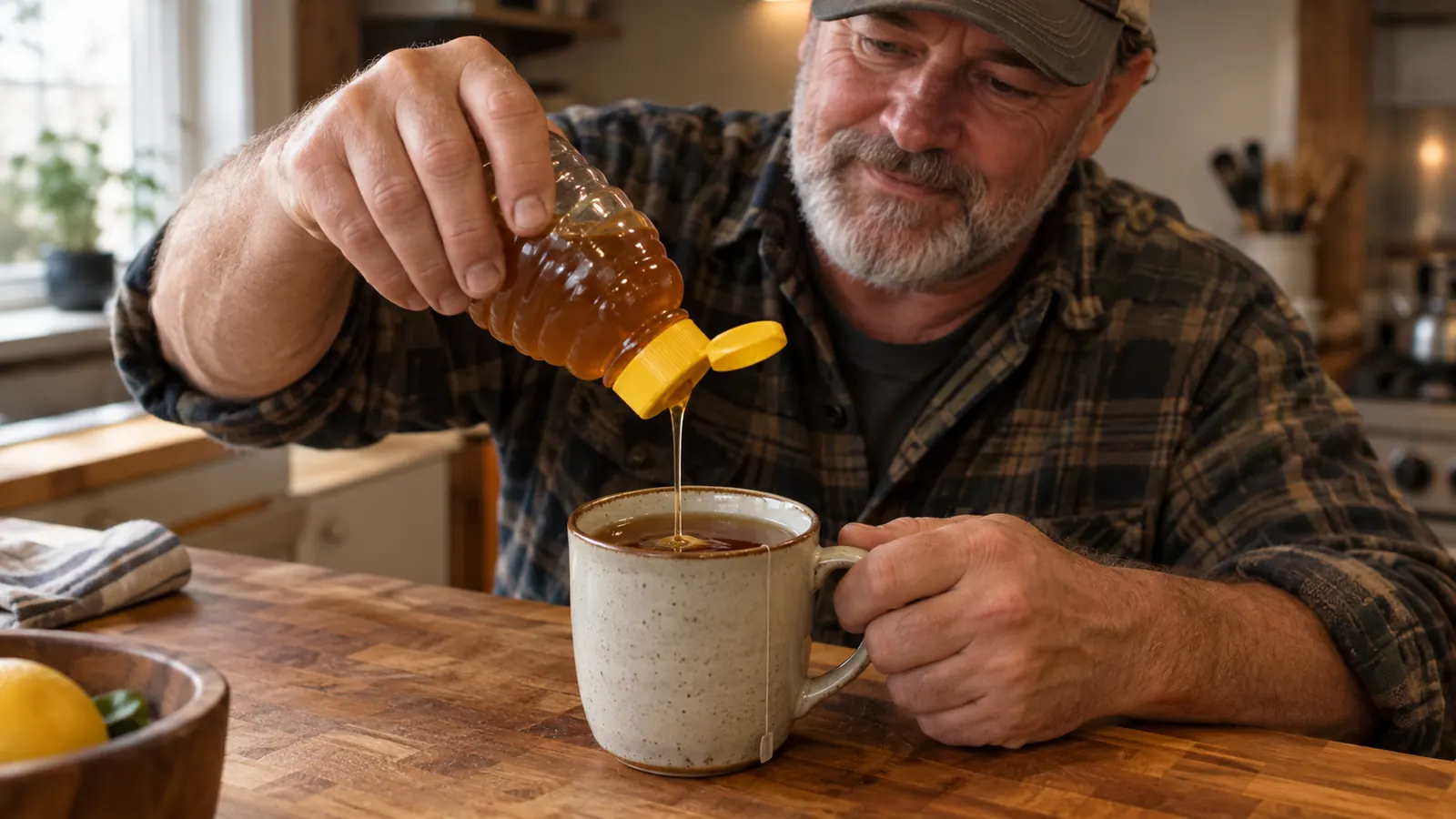
Most mornings start the same way here. I put the kettle on, pick a tea from the drying rack, and while it steeps I squeeze a good swirl of honey into the bottom of the mug. Peppermint from the garden with honey is my cold-weather standard. Lemon balm with honey is what I reach for when I want something calming in the evening. And on chilly evenings, I make a mug of hot water, lemon, and a generous spoonful of honey and sip it slowly.
Honey also shows up on my toast more often than jam, stirred into oatmeal, and drizzled over plain yogurt. Ray puts it on his morning biscuits, which he would never admit to in public. I have used it in granola, in a honey-mustard dressing, and in a batch of bread that disappeared before it cooled. The squeeze bottle makes all of this easy. You do not have to dig a sticky spoon into a jar, and the cap does not drip down the side the way every honey jar I have owned has dripped.
And then there are the old kitchen traditions. I keep a small notebook on the butcher-block table where I write down what I try and how it goes. Over the past year, honey has gone into my evening mugs of herb tea, into a warm drink after a long day of talking and laughing with friends, and into the herbal syrups I make for pancakes. I have also taken a spoonful straight when nothing else sounded good. I will say plainly that honey is a comfort and a food. It is not a medicine. If you are feeling unwell for more than a few days, call your doctor, and you should too.
What 'Raw and Unfiltered' Actually Means
The label on Nate's Honey says 100% pure, raw, and unfiltered, and after a year of buying it, I believe the label. Raw honey is honey that has not been heated past the point where the good stuff survives. Regular honey at the grocery store is often pasteurized and filtered until it is clear and perfectly smooth. That looks pretty on a shelf, but it also strips out the pollen and the fine particles that many people want from honey in the first place.
Unfiltered is the part that matters to me. It means the honey still has tiny bits of wax and pollen in it, the things that give raw honey its character. You can see them if you look closely, little specks floating in the bottle, and that is a good sign, not a flaw. When I hold the bottle up to the light, I can see that it is not perfectly clear, and that is exactly what I want.
I have also read the ingredient list, which says one thing: honey. No corn syrup, no sugar syrup, no flavoring, no preservatives. That matters to me because I use this in food and in remedies for my own family. When I buy a product that claims to be pure, I want the label to prove it, and this one does.
How It Held Up Over a Year
Honey does not go bad the way most foods do, but it does change. The first bottle I bought was smooth and poured easily. By the time I got to the bottom, it had started to crystallize, which is normal for raw honey and actually a sign that it has not been heated to death. I fixed it the way my grandmother fixed hers: I set the bottle in a bowl of warm water for a few minutes and it went back to pouring. Do not microwave honey. It ruins the good stuff. A warm water bath is all it needs.
The squeeze bottle deserves its own paragraph. I have bought honey in jars my whole adult life, and every single jar has ended up with a sticky rim and a crusty lid. This bottle has a flip-top cap that opens and closes cleanly, and the honey comes out in a steady stream instead of a glop. It is a small thing, but when you use honey every day, small things become important.
I have bought five bottles of Nate's Honey over the year, and the honey has been consistent from the first to the last. Same taste, same texture, same clean ingredient list. That consistency is the reason I keep coming back. I do not want to think about whether a new brand will be good. I want to know what I am getting, and I know what I am getting with this one.
The Kitchen Remedies I Actually Make
I want to be careful here, because the internet is full of honey claims that go way past what honey can do. Honey is a food, not a medicine, and I treat it that way. Here is what I actually do. On a scratchy, dry evening, a spoonful of Nate's Honey stirred into warm tea feels soothing and comforting, and the ritual of a warm mug before bed is part of how I wind down. If something is bothering you for more than a few days, or it feels serious, that is a job for your doctor, not your pantry.
My go-to remedy is a mug of hot water with the juice of half a lemon and a generous spoonful of honey. I drink it slowly, and it is the warmest, most comforting part of my evening. I also make a simple herbal syrup in the fall: I steep dried thyme or sage in hot water, strain it, and simmer it down with honey until it is thick. A spoonful of that in tea is comforting, and the honey is what makes it palatable at all.
Now the part that matters. Honey should never be given to a baby under one year old, because of the risk of infant botulism. That is not a suggestion, it is a hard rule. If you are pregnant, nursing, or taking medication, especially for blood sugar, talk to your doctor before you start using honey as a daily thing. Honey is a food, and a lovely one, but it is not a medicine. For anything serious, or anything that lingers, see a professional. I am a home herbalist, not a practitioner, and I want you to be safe.
Where It Shines and Where It Falls Short
Let me start with the honest complaints, because every review should have them. The squeeze bottle is wonderful while it lasts, but the last little bit of honey is hard to get out, and I end up adding hot water to the bottle and swishing it into tea to use the last of it. That is not a real problem, but it is a real annoyance.
The other thing to know is that raw honey is not the clear, light, perfectly smooth honey you might be used to from the grocery store. If you want that, this is not it. This honey is thick, it crystallizes over time, and it has visible particles in it. Those are all signs that it is raw and unfiltered, but they can surprise someone who has only ever bought the clear stuff. Read the label before you buy, so you know what you are getting.
A 32-ounce bottle is a good size for a household that uses honey daily. It lasted me about two and a half months of tea, toast, oatmeal, and the occasional remedy. That means I only have to think about restocking four or five times a year, and for a kitchen staple, that is the kind of low-maintenance I appreciate. I have bought it five times now, which is the truest thing I can say.
How I Store It and Keep It Pouring
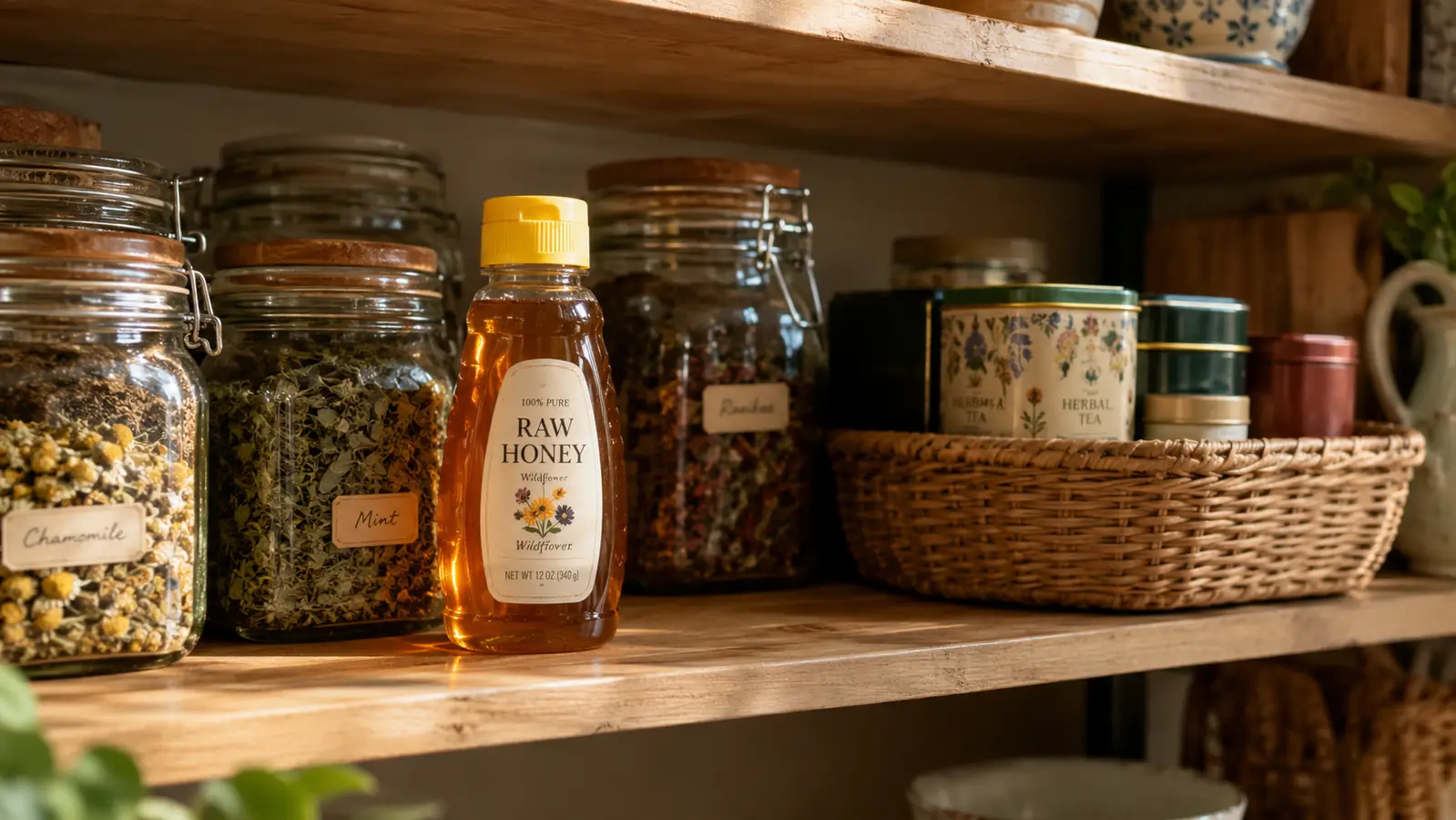
Honey does not need the fridge. In fact, the fridge makes it crystallize faster. I keep my bottle in the pantry, on the shelf where I can see it, and it is always ready when I need it. The kitchen here gets warm in the summer, and even then the honey stays fine. Honey is one of the few foods that basically keeps itself, as long as you keep the cap on and keep the water out.
If it does crystallize, do not panic and do not microwave. I set the bottle in a bowl of warm water for five or ten minutes and give it a shake, and it pours again. That is the whole trick. I have also learned to buy one bottle at a time instead of stocking up, because honey is easier to keep when it is in regular use, and I always have room for one more bottle on the shelf.
What I Liked
- Tastes like real honey, with a clean, simple flavor that works in tea, on toast, and in baking
- Raw and unfiltered, with a one-word ingredient list: honey
- Squeeze bottle pours cleanly and does not leave a sticky mess on the counter
- Consistent from bottle to bottle across a full year of daily use
- A 32-ounce bottle lasts a long time for a two-person household
Where It Falls Short
- Honey crystallizes over time, which is normal but can surprise new buyers
- The last bit of honey in the bottle is hard to get out
- Not the clear, light honey you might be used to from the grocery store
- Not suitable for babies under one year old, and not a substitute for medical care
I bought my first bottle in January and my fifth in December. That is the whole review in one sentence: I keep buying it.
Who This Is For
Buy this honey if you use honey the way I do: in tea, on toast, in oatmeal, in baking, and in the occasional kitchen remedy. If you want a raw, unfiltered honey with an honest ingredient list, and you want it in a bottle that does not make a sticky mess, this is a strong choice. It is also a good choice if you are new to raw honey and want to know what the real stuff tastes like, because this is a fair, dependable version of it.
It is especially good for people who keep a natural medicine cabinet and want a plain, useful staple on the shelf. Honey does not replace your doctor, but it pairs beautifully with a home herb garden, and it is one of the few remedies that actually tastes good. If that sounds like your kitchen, you will probably go through this bottle faster than you expect.
Who Should Skip It
Skip this if you want the clear, light, perfectly smooth honey that pours like syrup and never changes. Raw honey is not that. It thickens, it crystallizes, and it has visible bits of pollen and wax in it. If those things would bother you, you will be happier with a processed honey, and there is nothing wrong with that. It is just a different product.
Skip it if you are looking for something it cannot be. Honey is a food, not a medicine. It makes a warm drink feel special, it sweetens your tea, and it makes a fine gift for a neighbor, but it will not cure a cold or fix a serious health problem. If you need treatment, see a doctor. And if you have a baby under one year old in the house, keep this bottle well out of reach, because honey is not safe for infants. Those are the honest limits, and they matter.
A year in, this is still the bottle I reach for
If you want a raw, unfiltered honey that earns its place in a working kitchen, Nate's Honey is the bottle I have bought five times over. Check today's price on Amazon and see if it earns a spot on your shelf too.
Amazon Check Today's Price on Amazon →