
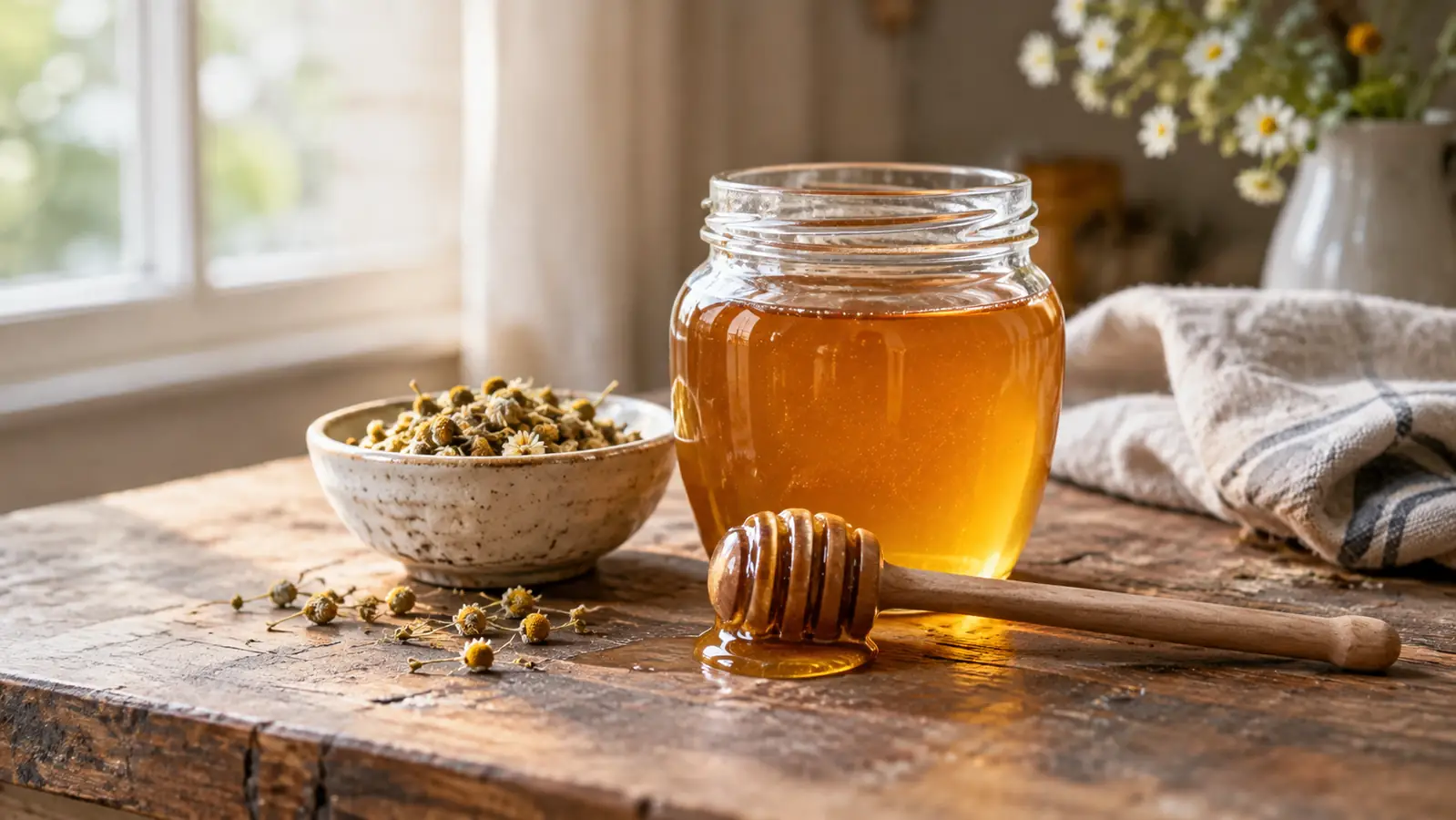
I keep two jars of honey in my pantry, and I have for years. One is a squeeze bottle of Nate's Honey, raw and unfiltered, that I reach for when I want the real flavor. The other is a clear jar of regular honey that I bought mostly out of habit, the kind that sits on grocery store shelves everywhere. They look similar at a glance. They are not the same thing, and the difference matters more than you might think.
I am Marlene Hutchins. I am 63 years old, I live in the Shenandoah Valley of Virginia, and I have kept a natural medicine cabinet and a kitchen herb garden for about twenty years. I am not a doctor and I am not a nutritionist. I am a retired bookkeeper who reads labels the way I used to read spreadsheets, carefully and with a healthy amount of suspicion. Here is what I have actually found after years of using both kinds of honey in my own kitchen.
My verdict: Raw honey wins for flavor, texture, and everyday kitchen use. Regular honey wins only if you want a perfectly clear, never-crystallizing bottle that pours without thought. For my money and my pantry, Nate's Honey is the one I buy again and again.
| Nate's Honey (Raw) | Regular Honey | |
|---|---|---|
| Processing | Raw and unfiltered, gently warmed to pour | Pasteurized and filtered for clarity and shelf life |
| Taste | Deep, floral, changes slightly with each batch | Mild and uniform, the same every time |
| Texture | Thick, sometimes creamy, will crystallize over time | Thin and clear, stays liquid for months |
| Cooking | Rich flavor for marinades, dressings, and baking | Neutral flavor, blends in without changing the dish |
| Pantry life | Crystallizes; warm water restores it | Stays liquid and clear for a very long time |
| Best for | Tea, toast, cooking, and a natural medicine cabinet | Anyone who wants a clear, pour-friendly bottle with no surprises |
What the Labels Actually Mean
The first thing I learned is that the word raw does not mean the same thing to every beekeeper, and it definitely does not mean the same thing to every grocery store. Raw honey is honey that has not been heated above the temperature it naturally reaches in the hive, and it has not been fine-filtered. That means it keeps the tiny bits of pollen, wax, and propolis that regular honey removes. Regular honey, the clear kind in the squeeze bears and plastic jars, has been pasteurized and filtered. Pasteurization kills any yeast in the honey and keeps it from fermenting. Filtration removes the particles that make raw honey look cloudy.
Here is the part that surprised me. Both kinds of honey are mostly the same sugars. Neither one is a medicine, and anyone who tells you otherwise is selling something. What changes is what gets left in. The pollen and the fine particles in raw honey are the things that give it its particular flavor and its cloudy look. They are also the things that people who keep a natural medicine cabinet care about, because those are the parts you cannot get back once they are filtered out.
When I buy Nate's Honey, the label says 100% pure, raw and unfiltered. That matches what I see in the bottle. It is cloudy, it is thick, and it tastes like the clover and wildflowers that the bees actually visited. When I buy regular honey, I am buying a product that has been standardized. It will taste the same in January as it did in July, and it will look the same for a year on the shelf. That consistency is nice if you are baking for a crowd. It is less interesting if you actually like honey.
I remember the afternoon I sat down and compared the two labels side by side. It was a Tuesday in early March, and I had both bottles on the butcher-block table. The Nate's Honey label listed one ingredient: honey. The regular honey label also listed one ingredient: honey. Same word, same legal definition, and yet the two bottles could not have been more different once you opened them. That is when I started paying attention to the words raw and unfiltered, because they are the only clues a label gives you about what is still in the jar.
The Raw Honey I Keep Reaching For
After years of buying both, Nate's Honey is the bottle I refill without thinking. It tastes like real honey, it stays thick, and it works for everything from tea to marinades.
Amazon Check Today's Price on Amazon →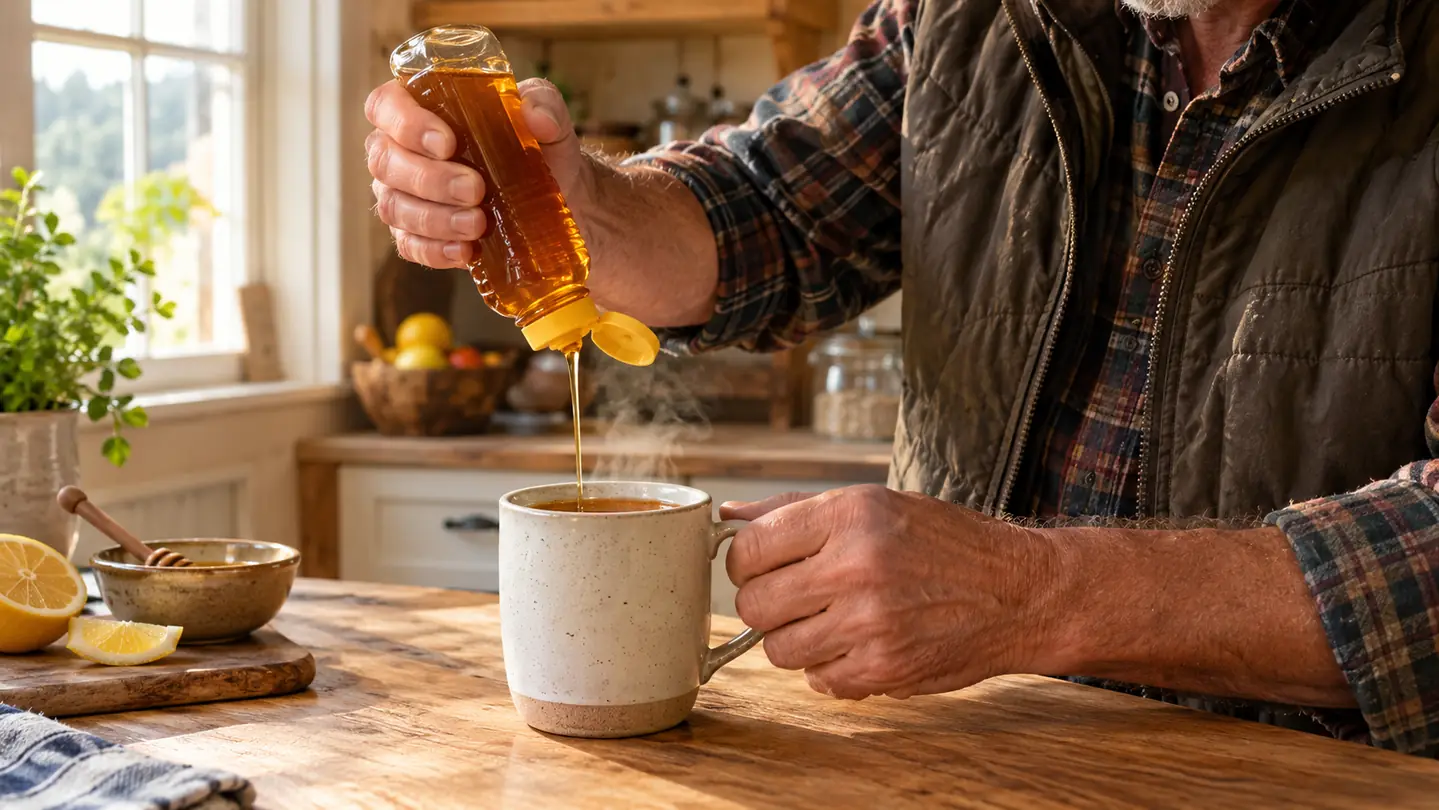
How I Tested Them in My Own Kitchen
I did not do a laboratory study. I did something better. I used both jars the way I actually use honey, every day, for several weeks. I stirred Nate's Honey into hot tea and I stirred regular honey into hot tea. I drizzled both over plain yogurt. I made salad dressing with both, one batch of vinaigrette with raw honey and one with regular. I baked two loaves of the same honey oat bread, one with each. I even ate both straight off a spoon, which is the fastest way to tell them apart.
The differences showed up immediately in the tea. Raw honey dissolved more slowly and left a faint cloudiness in the mug. Regular honey vanished into the tea without a trace. That sounds like a small thing, but it is not. The cloudiness is the flavor. The raw honey gave the tea a rounded, floral note that the regular honey did not. My husband Ray noticed it without me saying anything, and Ray does not notice much when it comes to food.
In the salad dressing, the difference was even clearer. I made a simple vinaigrette with olive oil, apple cider vinegar, a spoonful of honey, and a little mustard. The batch with Nate's Honey had a deeper, more interesting flavor. The batch with regular honey tasted fine, but it tasted like every other vinaigrette I have ever made. If you cook a lot, you know what that means. The regular honey was not bad. It was just forgettable.
I baked the honey oat bread on a Saturday morning in April, two loaves side by side in the same oven. Same flour, same oats, same yeast, same water temperature. The only difference was the honey. The loaf with Nate's Honey came out a shade deeper in color and smelled more fragrant while it baked. The loaf with regular honey was perfectly fine, but it did not smell like anything in particular. When I sliced them that evening, the raw honey loaf had a more open crumb, and the honey flavor came through even under the oats. Ray ate two slices of the raw honey loaf and one of the regular, then asked which was which.
The raw honey gave the tea a rounded, floral note that the regular honey did not. My husband Ray noticed it without me saying anything.
Where Nate's Honey Wins
Nate's Honey wins on taste, and taste is the reason most of us buy honey in the first place. The flavor is deep and floral, and it changes a little from batch to batch because it comes from real flowers. Some batches are lighter and more delicate. Some are darker and stronger. That variety is not a flaw. It is the sign of a real product. Regular honey is the same every time because it has been blended and filtered until all the character is gone.
It also wins on texture. Raw honey is thick and satisfying, the kind of honey that wraps around a spoon. It clings to toast instead of running off the edge. It coats a piece of chicken in a marinade the way honey should. When you use it in a natural medicine cabinet, that thickness is useful too. A spoonful of thick raw honey is easier to take straight than a runny syrup, and it clings to a spoon the way a thin syrup cannot. I keep a jar of Nate's Honey in the pantry specifically for that, and I have for years.
One evening last summer I made a marinade for chicken with Nate's Honey, soy sauce, garlic, and a splash of cider vinegar. The honey came from a darker batch, and it gave the chicken a deep, almost caramelized crust on the grill. The same recipe with regular honey a week later produced a perfectly edible dinner, but the crust was lighter and the flavor was flatter. My grandmother used to say that honey carries the memory of the flowers it came from. I think about that every time I open a new bottle and the color is a little different from the last one.
Where Regular Honey Wins
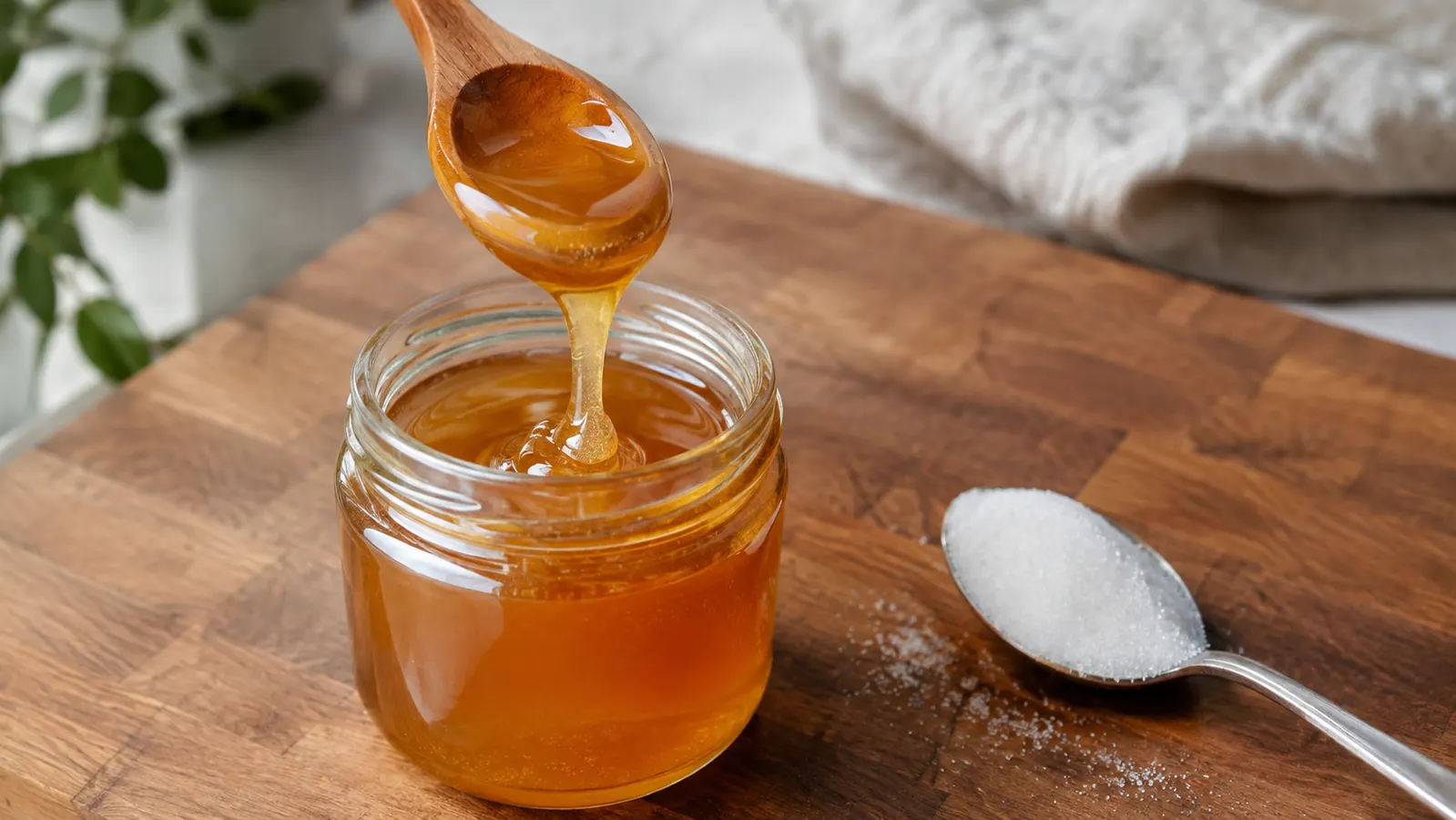
I am going to be honest with you, because any review that tells you one product wins everything is not a review, it is an advertisement. Regular honey wins on convenience. It stays liquid for months, it pours in a thin steady stream, and it never crystallizes. If you keep honey in an office drawer or a camping kit, or if you only use it once a month, regular honey is the easier choice. There is no warm water bath, no stirring, no waiting for the crystals to dissolve. You just squeeze and go.
Regular honey also wins if you want a completely neutral sweetener. In a recipe where honey is not supposed to be the star, like a barbecue sauce that already has molasses and brown sugar, the mild flavor of regular honey blends in and stays out of the way. The floral notes of raw honey can sometimes fight with other strong flavors. When I want honey to disappear into a dish, I reach for the regular jar. When I want honey to be the point of the dish, I reach for Nate's Honey.
The Crystallization Question
Every person who has ever bought raw honey has opened the cabinet one day and found a solid white jar. That is crystallization, and it is not a sign that the honey went bad. It is a sign that the honey is real. All honey crystallizes eventually. Raw honey does it faster because it still contains the tiny particles that give the sugar something to cling to. Regular honey does it slower because those particles have been filtered out.
The fix is simple. Set the jar in a bowl of warm water, not boiling water, and stir it every few minutes until it loosens up. Never microwave honey. Microwaving heats it unevenly and can destroy the delicate things that make raw honey worth buying in the first place. I have restored many a crystallized jar of Nate's Honey this way, and it comes back to its thick, cloudy self every time. The flavor does not change. The texture comes back. It just takes a few minutes of patience.
The first time a jar of Nate's Honey crystallized on me, I thought I had ruined it. I had set it in the back of the pantry and forgotten it for about two months, and when I pulled it out, the whole thing had turned solid and white. I nearly threw it away before I remembered what my grandmother had told me. I filled the sink with warm water, set the jar in it, and stirred every few minutes. Within twenty minutes it was back to its thick, cloudy self, and it tasted exactly the same as the day I opened it. Now I do not panic when I see crystals. I just move the jar to the counter and give it a warm bath.
The Jar That Earned a Permanent Spot in My Pantry
I have bought regular honey out of habit for years. Nate's Honey is the one I actually use. If you want honey that tastes like something, this is the bottle.
Amazon Check Today's Price on Amazon →Who Should Buy Which
Buy Nate's Honey if you use honey regularly and you care about flavor. Buy it if you stir honey into tea every morning, if you bake with it, if you make your own dressings and marinades, or if you keep a natural medicine cabinet and want honey with the pollen still in it. Buy it if you do not mind the occasional crystallized jar and you know the warm water trick. Buy it if you want to taste the difference between honey from real flowers and honey from a factory.
Buy regular honey if you want a bottle that never changes. Buy it if you use honey twice a year, if you need it to pour perfectly every time, or if you are baking for someone who expects a completely neutral sweetener. Buy it if the idea of a cloudy bottle bothers you. There is nothing wrong with regular honey. It is a perfectly good sweetener. It is just not the same product as raw honey, and pretending otherwise does not help anyone.
If you are pregnant, if you are caring for a baby under one year old, or if you are on medication that interacts with sugar, talk to your doctor before adding any honey to your routine. That is the kind of advice my grandmother gave me, and it is still the right advice. Honey is a food, not a treatment, and it belongs in the kitchen, not in the medicine cabinet as a replacement for real care.