
If you have ever tied herb bundles with kitchen twine and watched them mold on the counter, this review is for you. I am Marlene, and I have dried kitchen herbs in the Shenandoah Valley for about twenty years. Last summer I finally bought the Desy & Feeci 4-Layer Herb Drying Rack, and I want to tell you what it actually does in a real farmhouse kitchen, including the parts the product photos leave out.
The short version is that I like it and I still use it every harvest. The honest version is that it took me three tries to hang it correctly, it holds far less than I hoped, and you have to be careful which herbs you put in it. Here is everything I wish someone had told me before I ordered mine.
The Quick Verdict
A genuinely useful drying tool for small harvests, once you learn its quirks. Not a miracle, just a well-made mesh rack that does one job properly.
Amazon Check Today's Price →The mesh rack I reach for every harvest
After two seasons of drying peppermint, lemon balm, chamomile and sage, the Desy & Feeci 4-layer hanging dryer is the one I keep coming back to. See today's price on Amazon and decide if it fits your kitchen.
Amazon Check Today's Price on Amazon →How I Have Used It
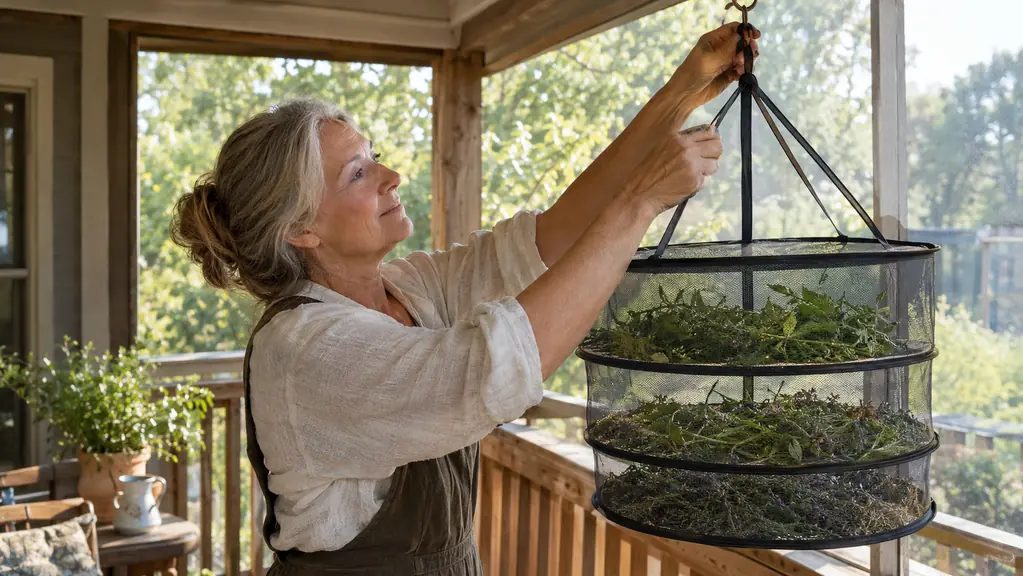
I bought the Desy & Feeci rack in July of last year, right at the peak of my peppermint harvest. My setup is simple: four raised cedar beds beside the back porch, with peppermint, lemon balm, chamomile, calendula, thyme, rosemary and sage. I cut in the morning after the dew dries, give the sprigs a quick rinse and a gentle shake, then lay them in the rack layers on the enclosed back porch. That first morning I filled two full layers with peppermint before I realized the sprigs were still dripping from the rinse. I had to take every stem back out, pat the leaves with a clean dish towel, and start over. It took an extra forty minutes, and it taught me the first rule: this rack wants herbs that are dry on the surface, not wet from the faucet.
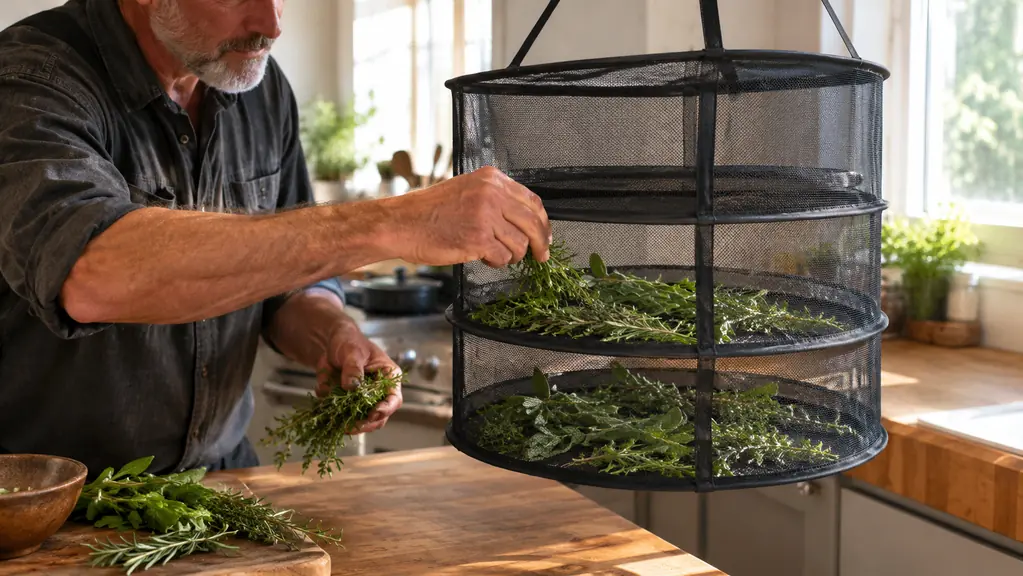
The rack has four round mesh layers that hang from a single hook. Each layer zips open around the edge so you can lay herbs flat instead of cramming them in. That flat layering is the whole point. Air moves through the mesh from every direction, so herbs dry evenly without the damp spots you get inside a paper bag or a closed jar. I measured the layers out of curiosity one afternoon, and each one is roughly eighteen inches across, which sounds generous until you see how quickly a handful of lemon balm spreads out. Two good handfuls per layer is about the limit if you want the leaves to dry in under a week.
My usual routine is to fill two layers with peppermint and lemon balm, leave one layer for chamomile flowers, and keep the fourth mostly empty so air can move. I hang it from a hook on the porch beam, out of direct sun. Most batches are dry in five to eight days, depending on humidity. Virginia summers are sticky, so I aim for the drier stretches and bring the rack inside if a storm rolls in. The evening that Tropical Storm Debby brushed past us in August, I carried the whole rack into the kitchen at midnight and hung it from the pot rack over the butcher-block table. The herbs finished drying in the kitchen in six days, and not a single leaf molded.
What Nobody Tells You Before You Buy
First, the rack is smaller than the photos suggest. The layers look generous in the product images, but each one holds about a grocery bag's worth of loose herb sprigs at most, and that is only if you lay them in a single loose layer. Cram two bags in and you will get soggy patches and a longer drying time. For a big garden, this is a small-batch tool, not a harvest-week workhorse. I learned this the hard way on the first Saturday of my oregano harvest, when I came back from the garden with three colanders full and realized only a third of it would fit. The rest went into paper bags on the pantry shelf, and half of that batch molded by Wednesday.
Second, the zippers are the weakest part. They are fine for light daily use, but they are not built for rough handling. I broke the pull on one layer within the first month because I yanked it shut with herbs stuck in the track. Go slowly, keep the mesh clear of the zipper teeth, and the rack will treat you well. After I broke that first pull, I started loading each layer with one hand while I held the zipper track open with the other. It takes about ten extra seconds per layer, and I have not had a single catch since.
Third, not every herb belongs in it. The Desy & Feeci rack shines for leafy herbs like peppermint, lemon balm, sage and thyme. It is also wonderful for chamomile flowers, which dry evenly without turning brown. But I would not put wet, heavy basil in it straight from the garden, and I would not use it for things like garlic or ginger that need different conditions. Match the tool to the herb and you will be happy. My basil goes to the dehydrator on the counter, my garlic hangs in its own braid by the cellar door, and the rack handles the leafy tea herbs it was made for.
The real test was a July peppermint harvest during a rainy stretch. The rack dried the leaves in six days with no mold, which my twine bundles never managed.
How It Dries Over Time
I have now used the Desy & Feeci rack through two full harvest seasons, plus a winter batch of rosemary and sage from the garden. The mesh has held up well. The layers keep their shape, the zippers still work as long as I treat them gently, and the whole thing folds flat for storage in about a minute. I keep mine on the top shelf of the pantry between harvests, and it takes up less room than a folded dish towel.
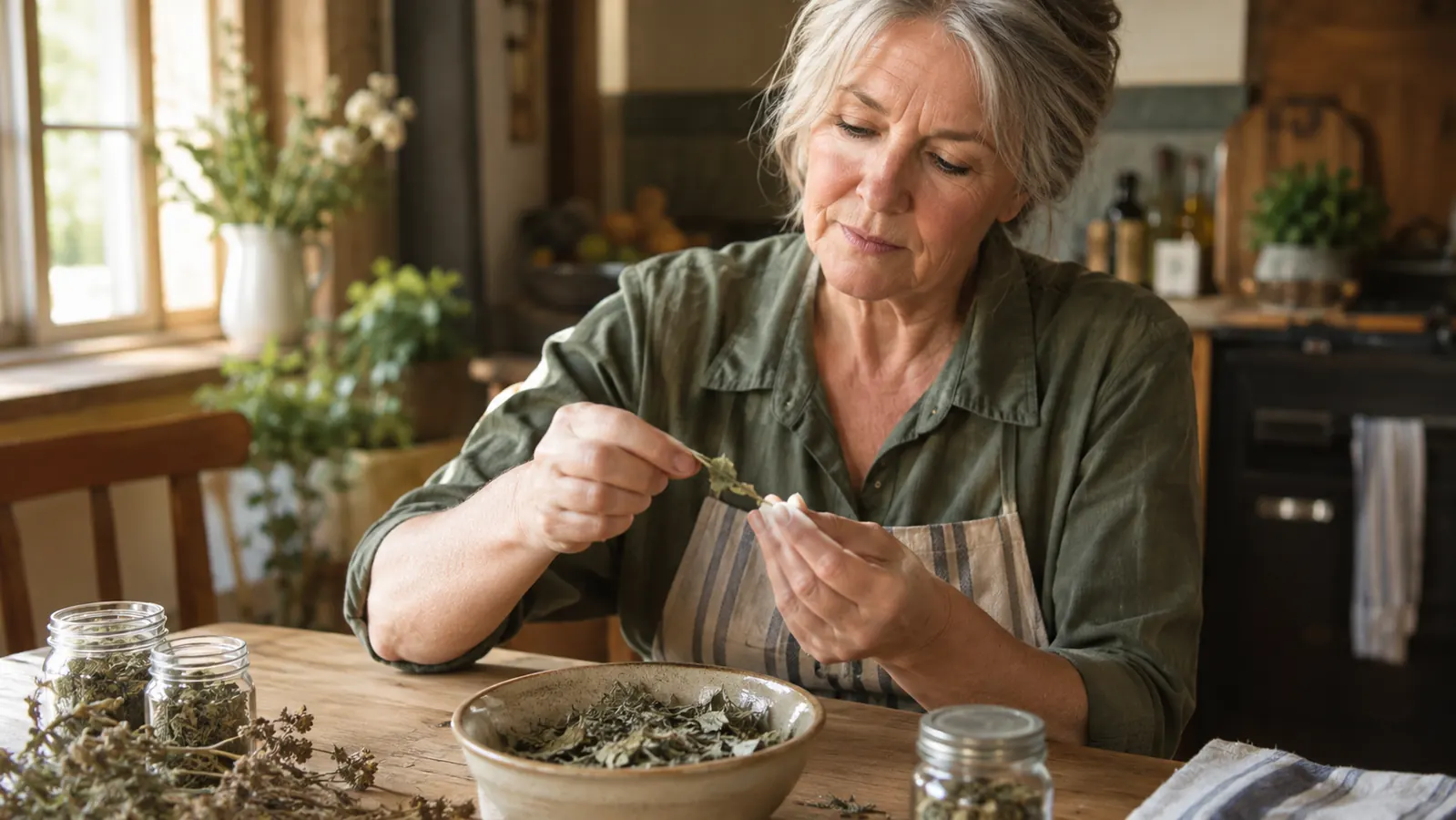
Drying time is where the rack earns its keep. Peppermint and lemon balm dry in four to six days in dry weather, five to eight when the humidity is high. Chamomile flowers dry in about five days and hold their color better than they did in my old paper-bag method. Rosemary and sage take longer, closer to ten days, because the leaves are thicker and the stems hold moisture. I tested a batch of rosemary last November with the rack hanging over the wood stove, and it dried in seven days, which surprised me, since the same batch would have taken two weeks on the porch in the damp.
One thing I learned the hard way: check the bottom layer first. It is closest to the floor and gets the least airflow on my porch, so it dries slowest. I rotate the layers every couple of days, moving the bottom one to the top, and that evens things out nicely. The rotation also gives me a reason to peek at each layer, and I catch any damp clump before it turns into a mold spot. On the morning of the fifth day, I unzip each layer, run my fingers through the leaves, and if any stem still feels cool or bendable, I leave that layer open for another night.
The Ingredient That Matters Most: Airflow
The reason this design works is simple. Herbs spoil during drying because trapped moisture lets mold grow. A flat mesh layer lets air reach every leaf, and the open weave lets moisture escape instead of pooling. That is the whole mechanism, and it is the same reason people have hung herbs in netting for generations. My grandmother hung her mint in a clean cotton pillowcase with the corners tied to a beam, and the principle was exactly the same: keep the leaves spread out, keep the air moving, keep the damp away.
What the Desy & Feeci rack adds is convenience. The four layers give you separate zones, so you can dry peppermint in one layer and chamomile in another without flavors mixing. The zippers let you load and unload without dumping herbs everywhere. And because it collapses flat, you can put it away between harvests instead of leaving a permanent eyesore on the porch. I also like that I can hang it at different heights. For the first two weeks I hung it high, near the porch ceiling, and I had to stand on a step stool to check the top layer. Then I moved the hook down to shoulder height, and daily checking became a two-second glance instead of a production.
Is it better than a paper bag? Yes, for leafy herbs, because airflow beats darkness when moisture is your enemy. Is it better than a dehydrator? That depends. A dehydrator is faster and more consistent, but it uses electricity, makes noise, and takes up counter space. The rack does its work silently on a hook, and for a home herbalist that trade is often worth it. On a humid August week when the dehydrator is already running for basil, the rack handles the mint and lemon balm at the same time, and I get two batches done without waiting in line.
Who This Is For
This rack is for the home cook or herbalist with a small or medium garden who wants to dry herbs the old-fashioned way, without the mold. It is for the person who already grows peppermint for tea, chamomile for evening cups, and sage for the winter jar. It is for the person who likes the look of herbs hanging on the porch but wants something neater than twine bundles. If you harvest two or three colanders of leafy herbs at a time, and you want them dry in a week without running the dehydrator, this rack will earn its place on your hook.
It is also for the person who wants to involve a curious grandchild in the harvest. Laying herbs into the mesh layers and zipping them shut is a pleasant, safe job for small hands, and checking the drying progress each morning becomes a small ritual. My neighbor's granddaughter helped me load a chamomile layer last June, and she came back every afternoon for a week to see if the flowers were dry yet. That is worth more than the price of the rack, if you ask me.
Who Should Skip It
Skip it if you harvest in serious bulk. If you are drying fifty bundles at a time for a business, or you want to process a whole garden in a weekend, this rack will frustrate you. The layers are too small for big harvests, and you would be better served by a dehydrator or a dedicated drying screen. My friend Carol runs a small herb stand at the farmers market, and she tried one of these racks for a single season before she gave up and bought a four-tier wooden drying screen that holds three times as much per layer.
Skip it if you want a set-and-forget tool. You do have to check the layers, rotate them, and bring the rack in when rain threatens. None of that is hard, but it is hands-on. And skip it if you are hoping to dry wet, heavy herbs like basil straight from a rainy garden. The rack cannot fix too much moisture going in. If you are the kind of person who wants to hang a batch and come back in two weeks, this is not the tool for you, because you will come back to a layer of gray fuzz instead of dried leaves.
Tradeoffs and Alternatives I Considered
Before I settled on the Desy & Feeci rack, I tried the classic bundle method for years. Tie five or six stems with twine, hang them upside down, and hope. The bundles look charming, but they dry unevenly, shed leaves on the floor, and mold in humid weather. The rack fixes all three of those problems for leafy herbs. I still use bundles for the occasional rosemary branch, because the stiff stems hold their shape nicely, but everything leafy goes in the rack now.
I also considered a wooden drying screen, the kind you stack like a cake stand. Those work beautifully and hold more per layer, but they take up counter space and cost more. For my porch hook, the collapsible mesh rack is the better fit. I have also used a food dehydrator for chamomile, and I will keep it for the days I need speed. But for the everyday summer harvest, the Desy & Feeci rack is what I reach for. It does the quiet work that the dehydrator does loudly, and it does it on a hook that was already there.
What I Liked
- Dries leafy herbs evenly with no mold, even in humid Virginia summers
- Four separate mesh layers keep peppermint, chamomile and sage from mixing
- Collapses flat for easy storage between harvests
- Silent and free to run, unlike a dehydrator
- Simple enough for a grandchild to help load
Where It Falls Short
- Smaller than the photos suggest; best for small and medium harvests
- Zippers are the weak point and need gentle handling
- Not suited for wet, heavy herbs like basil straight from the garden
- Needs regular checking and rotating to dry evenly
The Bottom Line
The Desy & Feeci 4-Layer Herb Drying Rack will not change your life, and it will not dry a commercial harvest. What it will do is dry your peppermint, lemon balm, chamomile and sage without mold, quietly, on a hook you already have. For a home herbalist who wants plain, practical results, that is a fair trade. It is a small-batch tool, and once you accept that, it stops being a disappointment and starts being a reliable part of the harvest.
If you grow tea herbs and hate losing them to dampness, I would buy it again. I would just hang it lower than I did the first time, zip it gently, and remember that it is a small-batch tool with a big heart. Two seasons in, mine is still hanging on the porch, ready for the next cutting, and that is about the best thing I can say for any piece of kitchen equipment.
Ready to dry this year's harvest without the mold?
The Desy & Feeci 4-layer hanging rack is the tool I keep coming back to after two seasons of real use. Check today's price on Amazon and see if it belongs on your porch.
Amazon Check Today's Price on Amazon →