

I will tell you the thing most honey reviews leave out: a 32-ounce squeeze bottle of Nate's Honey is not a pretty pantry decoration. It is a working bottle. It gets sticky. The cap crusts over. And if you leave it in a cold cupboard for two months, it will turn into a solid, grainy mass that will not squeeze no matter how hard you try. I know because I have kept one in my farmhouse kitchen in the Shenandoah Valley for two years, and I have made every mistake you can make with it. That is exactly why I am writing this honest review.
I am Marlene Hutchins, 63, a retired bookkeeper who has grown and used kitchen herbs for about twenty years. My husband Ray and I live with four raised cedar beds of peppermint, lemon balm, chamomile, calendula, thyme, rosemary, and sage beside the back porch, and my kitchen table is where I dry, blend, and bottle most of what we use. Honey is the one thing I do not produce myself, so I have spent real money trying to find a raw honey I can trust. Nate's Honey is the bottle I keep buying. This is the honest version of that story, including the parts the product page does not mention.
The Quick Verdict
A genuinely raw, unfiltered honey in a practical squeeze bottle, as long as you know it will crystallize and you are willing to warm it gently.
Amazon Check Today's Price →The raw honey I keep on my kitchen counter
After two years and more bottles than I can count, Nate's Honey is the one I reach for when my tea needs sweetening or I want something warm and sweet on a winter night. It is raw, unfiltered, and honest about what it is.
Amazon Check Today's Price on Amazon →What Nobody Tells You Before You Buy
The first thing nobody tells you is that raw honey does not look like the honey in the grocery store aisle. Nate's Honey is cloudy. It has tiny particles floating in it, bits of beeswax and propolis that the filtering process leaves behind on purpose. The first time I poured it, I held the bottle up to the window and wondered if something had gone wrong. Nothing had. That cloudiness is the whole point of buying raw honey instead of the clear, perfectly filtered stuff.
The second thing nobody tells you is that the squeeze bottle is both the best and worst part of the product. It is the best because you can drizzle honey into a mug of tea with one hand while the other hand holds the kettle. It is the worst because honey is sticky, and the cap will always collect a little residue. You will wipe it. You will forget to wipe it. You will find the bottle stuck to the shelf. This is not a flaw in Nate's Honey. It is the physics of honey in any container. But I would rather know that before I buy than discover it after.
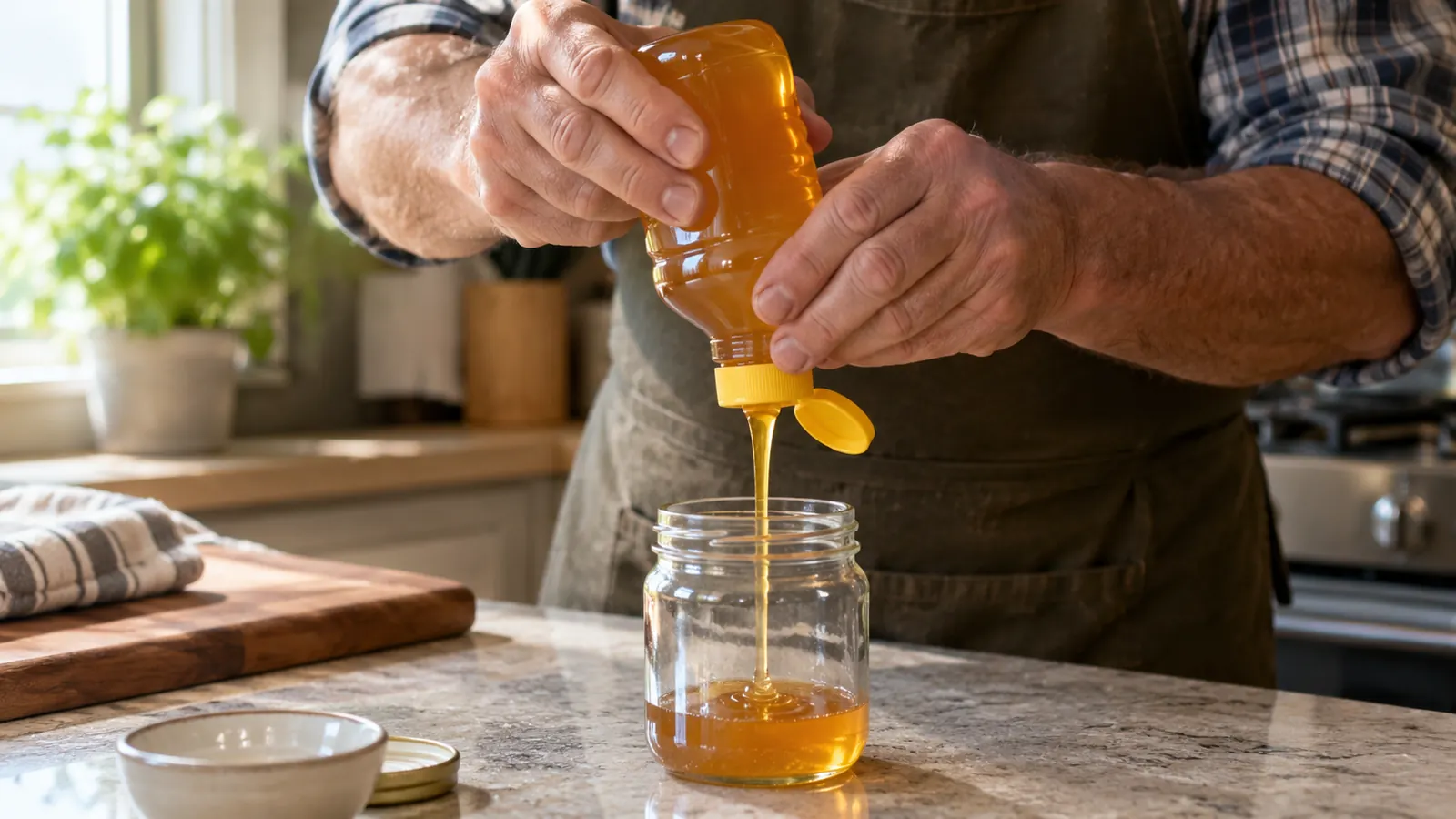
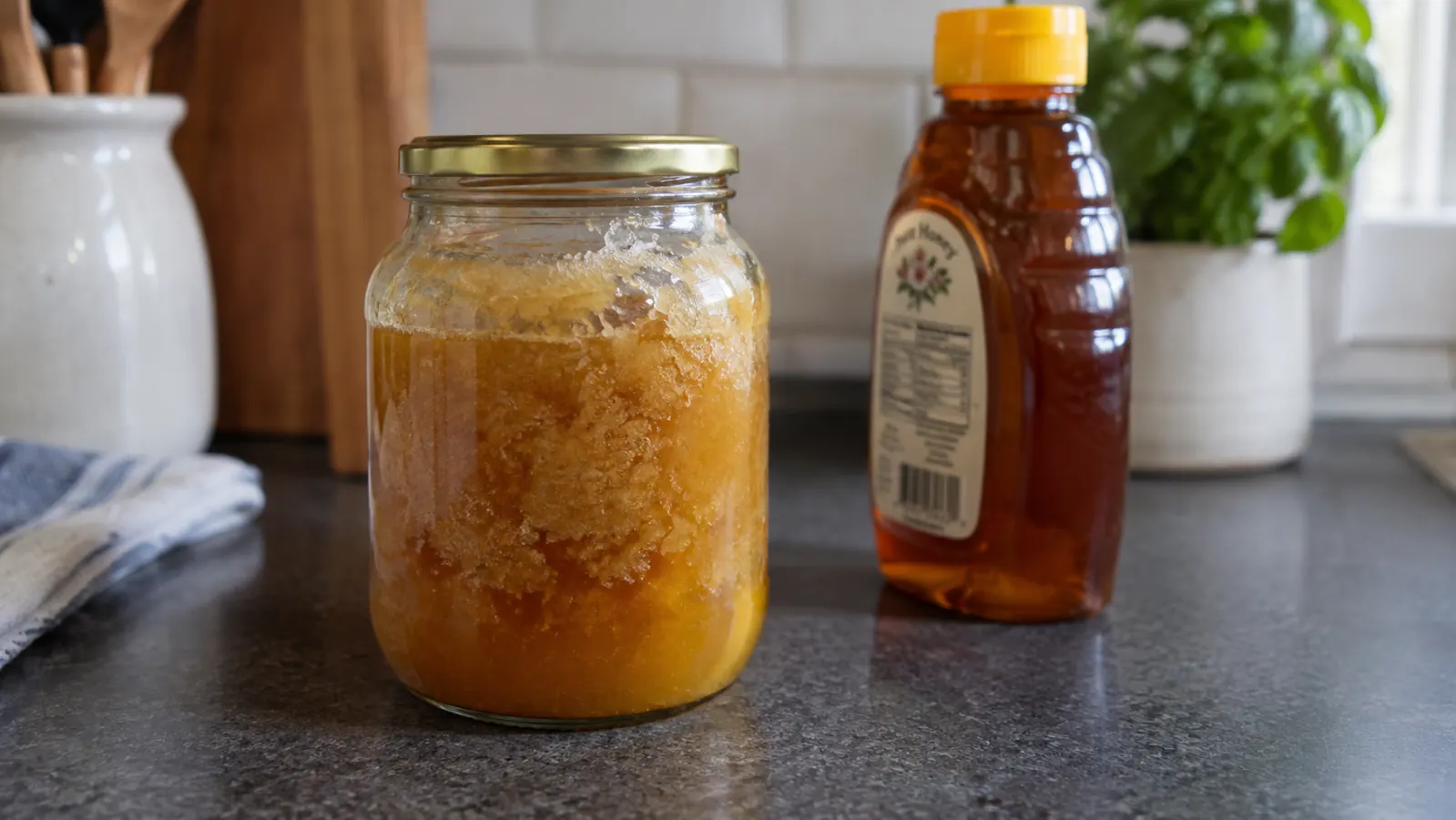
The third thing nobody tells you is the crystallization. Every bottle of raw honey will eventually crystallize. It is not a sign of spoilage, it is a sign the honey is real. Nate's Honey crystallizes faster than the filtered honey I used to buy, because nothing has been heated or strained to keep it liquid. My first bottle arrived the second week of March, and by the third week of April it had turned thick and grainy in the back of the cool pantry. I panicked. I nearly threw it out. Then my grandmother's voice came back to me: honey does that, and you fix it with warm water, not boiling water. I tried the microwave first, one minute on high, and that was a mistake. It heated unevenly, left hot spots near the edges, and the middle stayed solid. I set the bottle in a bowl of warm tap water instead, left it for twenty minutes, and it poured again. That was the day I learned the rhythm: crystallize, warm, pour, repeat.
How I've Used It
I have used Nate's Honey in three ways, week in and week out, for two years. The first is the simplest: a spoonful in a mug of hot tea. I grow peppermint and lemon balm on the back porch, and there is almost always a jar of dried leaves on my kitchen counter. Honey and homegrown mint tea is the comfort drink of this house, especially on cold Valley mornings.
The second way is in the kitchen. I use it in salad dressings, in a glaze for carrots from the farmers market, and stirred into plain yogurt with a handful of walnuts. My standard dressing is two spoonfuls of honey, a spoonful of apple cider vinegar, a spoonful of olive oil, and a pinch of dried thyme from my garden. It keeps for a week in a jelly jar, and I shake it before every pour. Honey is not just a sweetener, it brings its own flavor, and Nate's Honey has a deeper, more floral taste than the clear bottles I used to buy. You notice it most in something simple, like yogurt, where there is nothing to hide behind. One morning last October I stirred it into plain yogurt with walnuts and a few slices of the last apple of the season, and Ray said it tasted like a fancy breakfast from the inn downtown. It was just yogurt, honey, and an apple.
The third way is the one I am most careful about how I describe. On dry winter evenings, after a day of heat from the wood stove, I stir a spoonful of Nate's Honey into a mug of hot water, sometimes with a pinch of dried thyme from my garden, and sip it slowly in my chair before bed. It is warm, it is sweet, and it is one of the most comforting small rituals in my week. Honey has been part of kitchen traditions like this for generations, and I find it genuinely pleasant. But I am not a doctor, I am a home herbalist, and I always tell people the same thing: if you are feeling unwell, or have a medical condition, or take medication, talk to your doctor first. Honey is food, not a treatment, and it is never safe for infants under one year old. That last part is not a suggestion, it is a hard rule.
The Ingredient Label, Read Honestly
The label on Nate's Honey says exactly one thing: 100% pure raw and unfiltered honey. That is the entire ingredient list. There is no corn syrup, no added sugar, no flavoring, no preservatives. For someone like me who reads labels the way other people read novels, that is the most reassuring sentence on the bottle.
Raw honey is honey that has not been heated above the temperature a beehive naturally reaches, so the enzymes, pollen, and other compounds survive intact. Unfiltered means the fine particles and bits of wax are still in there. Both matter to me because I buy honey partly for the flavor and partly because I want a food that is as close to the hive as I can get without keeping bees myself. I read the label on the back of the squeeze bottle the day it arrived, and I read it again last week, and it has not changed: one ingredient, nothing else. That consistency is rare in the grocery store, where most sweet things arrive with a paragraph of fine print. I keep a jar of dried chamomile from my garden next to the honey bottle, and when I make a bedtime cup, I add a spoonful of honey and think about the fact that both of them came from a plant and a hive, not from a lab.
What the label does not tell you is where the bees worked. Nate's Honey is a blend of honey from multiple sources, which is common for a large brand, and it means the flavor can vary a little from bottle to bottle. One bottle might taste more floral, another more like wildflower. I do not mind that variation, it is the nature of a natural product. But if you are the kind of person who wants the exact same taste every single time, a single-origin honey from a local beekeeper will give you that consistency, and it will cost more.
Every bottle of raw honey will eventually crystallize. It is not a sign of spoilage, it is a sign the honey is real.
The Honest Problems
Here is where I earn the honest part of this review. The squeeze bottle is the biggest frustration. The cap collects sticky residue, the threads get crusty, and if you do not wipe it, you will have a honey-flavored glue situation on your shelf. I learned this the hard way in the first month, when the bottle sat in the pantry with a crusted cap and I had to run warm water over the lid for a full five minutes before it would turn. Now I keep a damp cloth near the honey jar, and I wipe the cap every time I use it. That is a small chore, but it is a real one. I also learned to store the bottle upright, not on its side in a cupboard, because honey finds every crack in a cap when it is lying down.
The crystallization is the second frustration. It is not a defect, but it is inconvenient. When the honey turns solid, you cannot squeeze it, and if you are in a hurry, you will be tempted to microwave it. Do not microwave honey. It heats unevenly and can destroy the very things you bought raw honey for. I know, because I did it once, and the bottle was too hot to hold on one side and still solid on the other. The right way is to set the bottle in a bowl of warm water, not boiling, and let it sit for fifteen or twenty minutes. It will flow again. It will crystallize again, eventually, and you will do it again. That is the honest rhythm of raw honey. In my kitchen that rhythm runs about every six weeks in winter and every three months in summer, because the pantry is warmer when the garden is going.
The third problem is the price. Nate's Honey is not the cheapest honey in the store, and a 32-ounce bottle is a commitment. You are paying for raw and unfiltered, which costs more than the clear stuff. I think it is worth it, but I would not pretend it is a bargain. If you only use honey once a month for baking, a smaller bottle or a cheaper filtered honey might serve you just fine.
What I Liked
- Truly raw and unfiltered, with a one-word ingredient list
- Squeeze bottle means no spoon, no honey dipper, no sticky drawer
- Deep, floral flavor that clear honey does not have
- Crystallizes, which proves it is real, and warms back easily
Where It Falls Short
- The cap gets sticky and crusty and needs wiping every time
- It will crystallize in a cool pantry and needs a warm water bath to flow again
- A blend, so the flavor varies a little from bottle to bottle
- Costs more than the clear filtered honey in the regular aisle
How It Compares to What I Used Before
Before I found Nate's Honey, I bought whatever clear honey was on sale at the grocery store. It looked pretty, it never crystallized, and it tasted like almost nothing. I did not realize how much flavor I was missing until I poured my first bottle of Nate's Honey into a mug of tea one evening in early March. I stirred it, took a sip, and stopped. The difference is not subtle. The raw honey has a floral, slightly grassy depth that the clear stuff simply does not have. It reminded me of the honey my grandmother kept in a stone crock on her shelf, which is the highest compliment I know how to give a jar of honey.
I have also tried local honey from a beekeeper at the farmers market, and it is lovely. She sells it in mason jars with a handwritten label, and the flavor shifts with every season, clover in spring, wildflower in summer, goldenrod in fall. It costs roughly twice as much as Nate's Honey, and I buy it when I want something special for a gift or a Sunday breakfast. But for daily use, for the bottle that lives on my counter and gets squeezed into tea every single morning, Nate's Honey is the one that makes sense. It gives me the raw, unfiltered honey I want at a price I can keep paying.
One more honest note: the squeeze bottle is the reason I keep coming back. A jar of honey is beautiful, but a jar requires a spoon, and a spoon means a sticky honey dipper or a honey-covered spoon resting on a saucer. The squeeze bottle means no spoon at all. I drizzle, I wipe the cap, I close it. That is the whole ritual. On busy mornings, when I am filling the kettle and hunting for my glasses at the same time, that one-handed squeeze is the difference between honey in my tea and honey staying in the cupboard. It sounds like a small thing. After two years, it is the thing I notice most.
Who This Is For
This bottle is for the person who uses honey most days, not once a month. It is for the tea drinker, the oatmeal eater, the person who stirs honey into yogurt and wants a real, unprocessed flavor. It is for the home herbalist who keeps a natural medicine cabinet and wants a pantry staple that is as close to the hive as a big brand can get. If that sounds like you, a 32-ounce squeeze bottle of Nate's Honey will earn its place on your counter.
Who Should Skip It
Skip it if you want a honey that stays perfectly liquid forever, because raw honey will not. Skip it if you hate the idea of wiping a sticky cap, because you will be wiping it. Skip it if you want to know exactly which flowers the bees visited, because this is a blend. And if you are buying honey for a baby under one year old, do not. Honey is not safe for infants, and no brand changes that. Also skip it if you only bake with honey at the holidays, because a 32-ounce bottle will sit half full in your cupboard and crystallize before you finish it. For that, a small jar you use up in a month is the better buy.
The bottle I have bought twice a year for two years
Nate's Honey is not perfect. The cap gets sticky and the honey will crystallize. But it is raw, unfiltered, honest, and it tastes like something real. For my kitchen, that is the whole argument.
Amazon Check Today's Price on Amazon →