
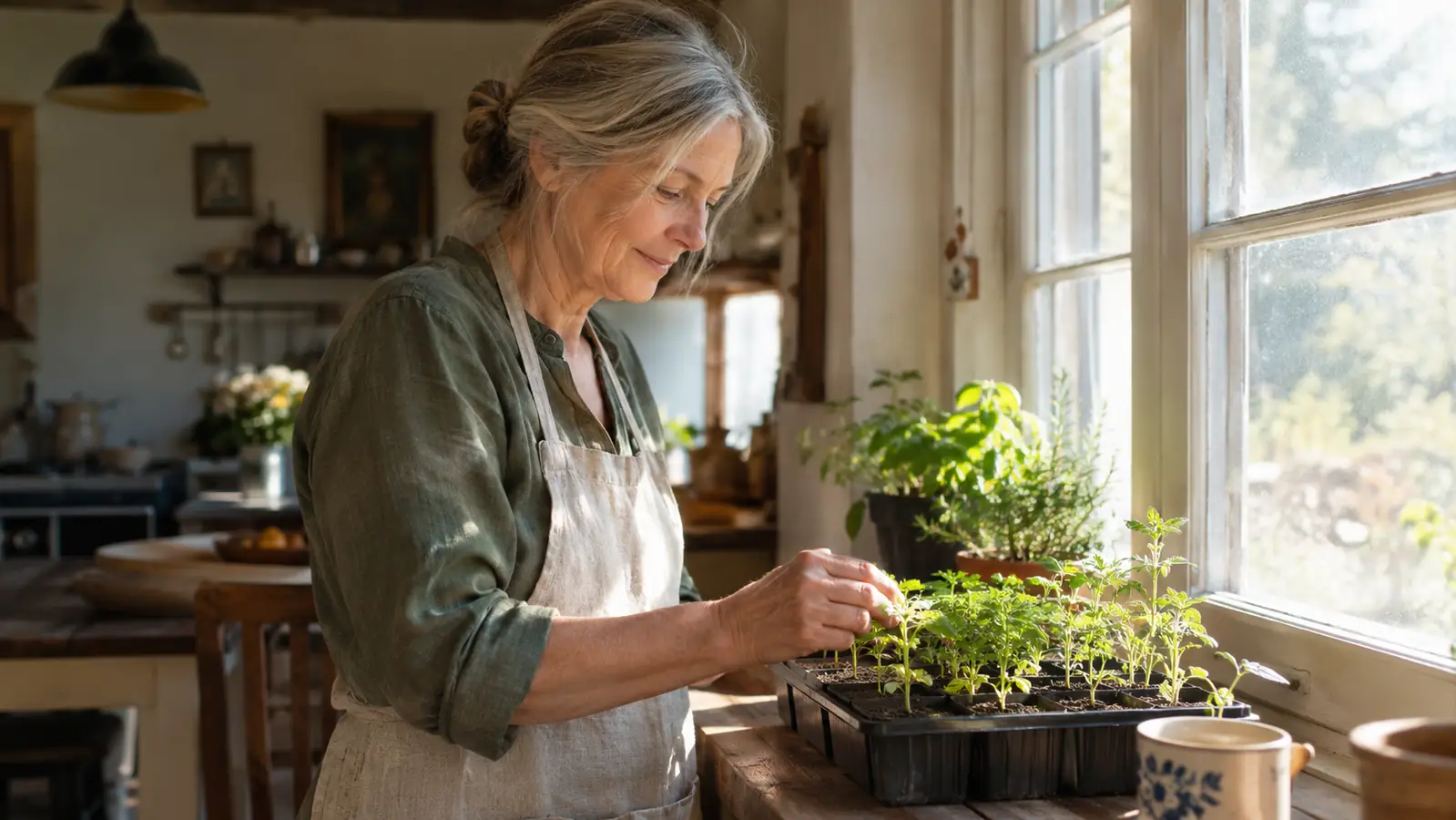
I have grown kitchen herbs for about twenty years, most of it outdoors in four raised cedar beds beside our back porch. Peppermint, lemon balm, chamomile, calendula, thyme, rosemary, and sage all go into the teas and remedies I make on the butcher-block table in our farmhouse kitchen. So when a friend asked what I thought of the Planters' Choice Indoor Herb Garden Kit, I gave her the honest answer: I had never used one, and I was not sure I needed to. Seed starting is not hard once you have done it a few times, but it has a learning curve, and I was curious whether a kit actually smooths that curve for someone standing in front of the seed rack feeling overwhelmed. I ordered one to find out.
This is the review I would have wanted to read before I spent my own money. It is not the one the product photos tell. The kit grew real herbs, and I still use the chives today, but there are things nobody puts in the listing, and those are the things that decide whether you end up with a windowsill full of basil or a tray of guilt. Here is what actually happened, from the first seed to the last pinch.
The Quick Verdict
A genuinely useful starter kit for someone with a sunny windowsill and a little patience. The herbs are real, the instructions are clear, and the pots are too small by week six. Plan to transplant and you will be glad you bought it.
Amazon Check Today's Price →See Today's Price on the Planters' Choice 9 Herb Kit
This is the kit I tested all winter on my own windowsill. Check the current price on Amazon and see if it fits your kitchen.
Amazon Check Today's Price on Amazon →How I've Used It
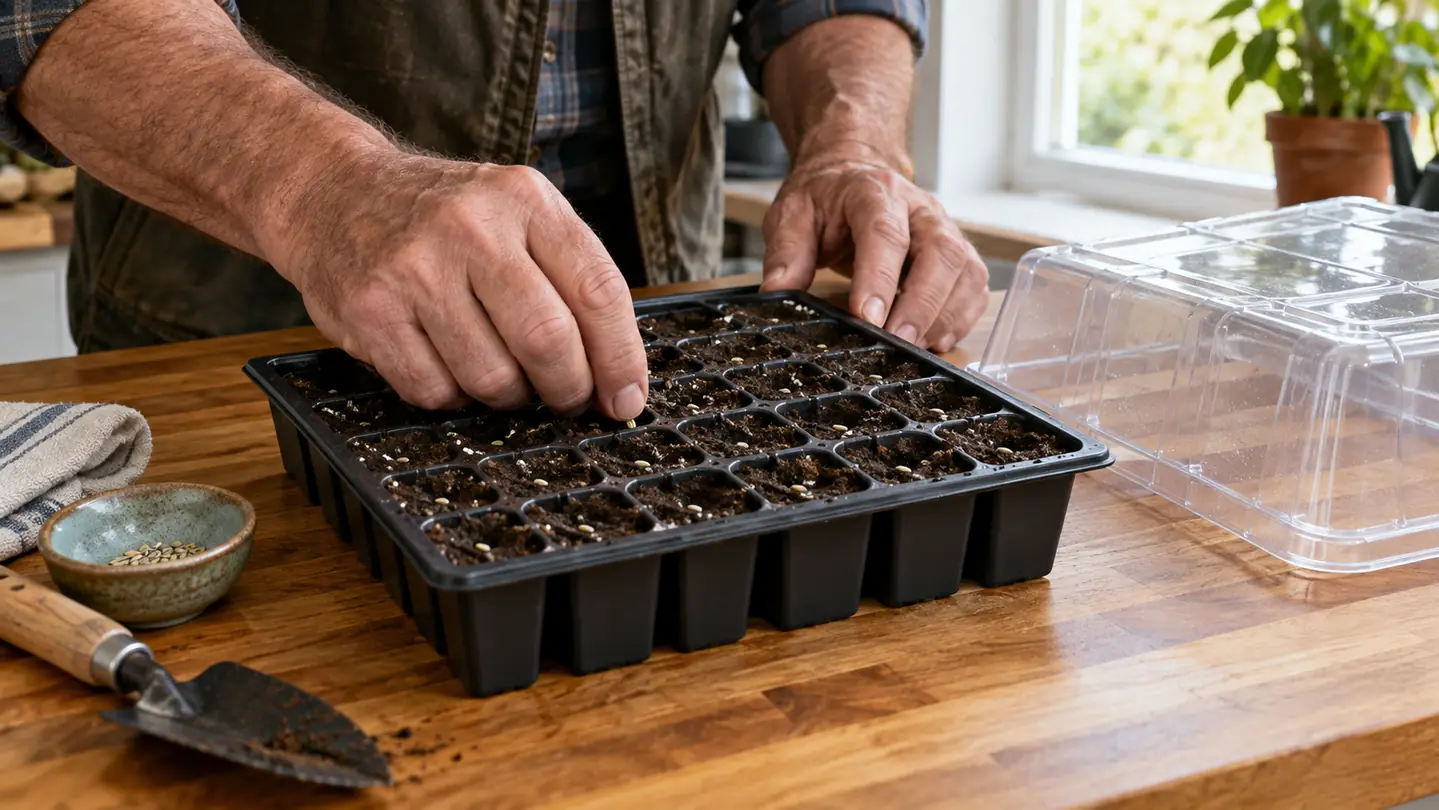
The kit arrived in a flat box with nine varieties of seed, a plastic tray, a set of small pots, and compressed soil pellets that expand when you add water. I set it up on the butcher-block table, which is where I do all my drying, blending, and bottling. The instructions said to soak the pellets, fluff them with a fork, and press one seed or two into each pot. I followed that, mostly, and I am glad I did, because the pellets really do expand into a nice, loose soil that drains well.
I planted the whole thing on a Tuesday in late February. Our kitchen windowsill faces south and gets a long stretch of afternoon sun, which matters more than anything else with this kit. I labeled each pot with a piece of masking tape, because the labels that come with the kit are small and easy to mix up, and I kept the clear plastic lid on until the first seeds showed green. The lid acts like a little greenhouse, and it is the part of the kit I would not want to do without.
Over the next few months I pinched the basil, cut the chives with scissors, and dried the oregano on the enclosed back porch the same way I dry the garden harvest. I kept a notebook, the same one I use for the raised beds, and wrote down when each herb sprouted and how fast it grew. That notebook is where most of this review comes from, because memory is kind and notebooks are not.
What's Actually in the Box, and What Isn't
The Planters' Choice kit comes with nine herb varieties: basil, cilantro, chives, dill, oregano, parsley, sage, thyme, and a ninth that I had to check twice because I did not expect it in a windowsill kit. The seed packets are labeled, the pots are the small biodegradable kind, and the tray catches the water. There is also a clear plastic lid that acts like a little greenhouse, and that lid earns its keep in the first two weeks.
Here is what is not in the box: a sunny window, patience, and a pair of scissors. The kit cannot supply light, and that is the single biggest reason some people end up disappointed. If your kitchen windowsill gets less than four or five hours of direct sun, the herbs will get leggy and pale. I have seen this happen to friends, and I want to be plain about it, because the photos on the listing all show a perfect green row of herbs in a bright window. That window is doing more work than the kit is.
The other thing the box does not tell you is that the nine herbs do not grow on the same schedule. Basil and cilantro are quick and eager. Chives took their time. The slowest herbs sat there for weeks looking like nothing was happening, and if I had not grown seeds before, I would have assumed I had done something wrong. I had not. That is just how parsley and thyme behave, and the kit cannot change that.
The instructions deserve a mention, because they are better than most. They tell you which herbs like more light, which ones can handle a little crowding, and what to do when the seedlings get their first true leaves. That last part matters, because thinning seedlings is the step most beginners skip, and skipping it is how you end up with a pot of tangled stems. The Planters' Choice instructions walk you through it in plain language, and I appreciated that.
Which Herbs Sprouted Fast, and Which Tested My Patience
Basil was the star. It came up in about a week, and by the end of the second week it had real leaves. Cilantro was close behind, which surprised me, because cilantro bolts so easily outdoors in the Virginia summer heat. Indoors on a cool windowsill it stayed happy for a long time, and I used it in salsas and on tacos and in the kind of simple salads we eat with supper.
Chives and oregano were the middle of the pack. The chives looked like thin green grass for weeks before they thickened up, and the oregano took its time but then grew steadily. Both of them are perennials, which means they would keep growing for years if I had kept them going. I did keep the chives going, actually. They are still on the windowsill as I write this, and I cut some into my eggs most mornings.
Parsley and thyme were the slow ones. Parsley is famously slow to germinate, and this kit did not change that. Thyme is slow too, and it stays low and small, which is fine for a kitchen herb but easy to mistake for a failure if you do not know what you are looking at. If I had started these from seed in my own trays, the timing would have been the same. The kit did not slow them down, but it did not speed them up either. That is the honest truth of it.
Basil came up in about a week. Thyme sat there for three weeks looking like a pot of dirt. Both of them were doing exactly what they were supposed to do, and that is the whole story of this kit in one sentence.
The Truth About the Pots, and the Transplant You Will Need to Do
Here is what nobody tells you about this kit, and it is the thing I most want you to hear: the pots are small. They are perfect for the first month, and they are too small by the second month. Basil, in particular, will send roots out the bottom and start to look cramped. That is not a defect in the kit. It is what plants do when they are healthy. But you need a plan for it, and the plan is a bigger pot.
My plan was to transplant the basil, cilantro, and chives into bigger pots that I already had on the shelf in the back porch. I used a simple potting mix, not garden soil, and I was careful not to disturb the roots more than I had to. The transplant took about ten minutes per herb, and every single one of them settled in and kept growing. If you do not have spare pots, you can buy a few inexpensive ones, or you can plant the whole kit into a long window box and let the herbs sort themselves out.
The other thing about the small pots is that they dry out faster than bigger ones. On a sunny windowsill with the heat coming off the radiator, I had to check the soil every day. The tray holds water, so the easiest habit is to water from the bottom, let the pots soak for ten minutes, and pour off what the plants do not drink. That one habit saved my herbs more than once.
What Nobody Tells You About Light, Water, and Real Life
The listing shows a tidy row of herbs on a bright windowsill, and that image is not a lie, but it is a best-case version. Our kitchen window faces south, which is the best direction for herbs in the northern hemisphere, and even then, the herbs nearest the glass did noticeably better than the ones a few inches back. If your only window faces north, I would not buy this kit. I would buy a small grow light instead, or I would grow herbs outdoors in the growing season.
Watering is the second thing. The soil pellets expand to a nice, loose texture, and they hold water well, but the surface dries out quickly. The instructions tell you to keep the soil moist, not soaked, and that is the right advice. I watered from the bottom most days and let the tray do the work. Overwatering is the more common mistake, and it will rot the seeds before they ever sprout, so when in doubt, let the soil dry a little.
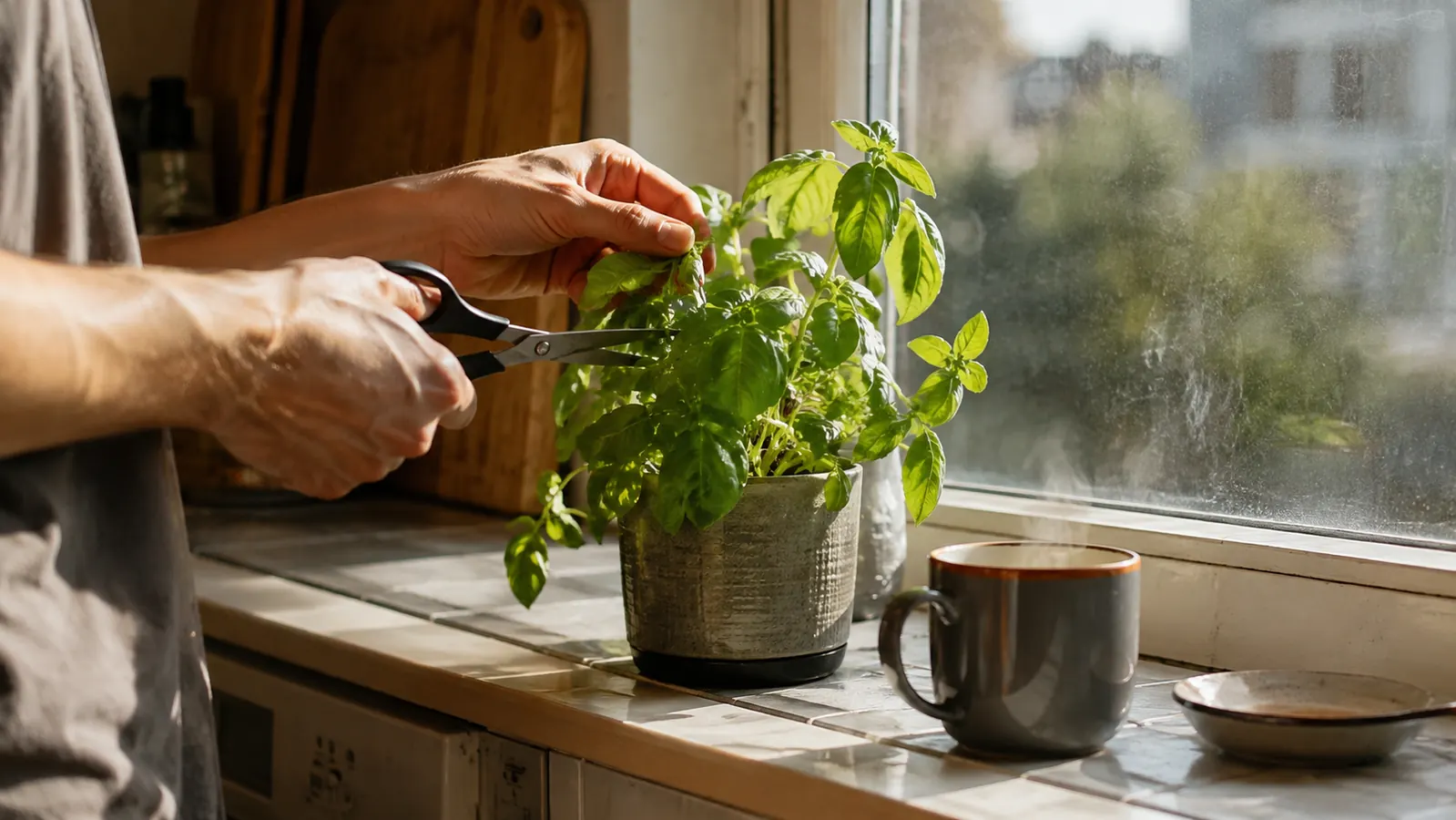
The last thing is the one nobody puts in the listing: you have to use the herbs or they will outgrow you. Basil left alone becomes a tall, woody plant that thinks it is a tree. The fix is to pinch the tops regularly, which sounds like a chore and is actually the most pleasant part of the whole kit. Every time I pinched the basil, the kitchen smelled like summer, and the plant got bushier in response. That is the whole cycle of growing herbs indoors, and it is a good one.
How the Herbs Actually Performed in My Kitchen
I used the herbs the way I use the ones from the raised beds. The basil went into pasta and onto sliced tomatoes. The cilantro went into salsa. The chives went into scrambled eggs and baked potatoes. The oregano I dried and crumbled into the jar I keep on the butcher-block table. The parsley went into a batch of tabbouleh, and the sage went into the Thanksgiving stuffing, which is the highest compliment I can pay a kitchen herb.
The dill was the surprise. I have never had much luck with dill outdoors, because it bolts the minute the weather warms up. Indoors, it stayed compact and productive for weeks, and I used it in potato salad and on salmon. Ray asked for the potato salad twice, which is high praise in our house. That alone made the kit worth it to me, because it grew a herb that I have struggled to grow for years, and it did it on a windowsill in the middle of winter.
I also made tea from the herbs, because that is how I use most of my garden. A few sprigs of oregano or thyme in a mug of hot water, with a little honey, is a comforting thing on a cold evening. I want to be careful here, the way I always am: I am a home herbalist, not a doctor, and I am not prescribing anything. Herbs are food and flavor and comfort in my kitchen. If you take medications or have health conditions, talk to your doctor before making herbs a regular part of your routine.
What I Liked
- Nine real herb varieties in one box, including dill, which is hard to grow outdoors in warm climates
- Clear instructions and a greenhouse lid that genuinely helps seeds germinate
- The soil pellets expand fast and hold moisture well
- Compact enough to fit on a kitchen windowsill
- A thoughtful gift for a cook who has never grown anything
Where It Falls Short
- The pots are too small by the second month, and you will need to transplant or thin
- Parsley and thyme are slow to germinate and easy to mistake for failures
- The kit assumes a bright, sunny window and will not perform well in low light
- The small labels are easy to mix up; I used masking tape instead
- You have to stay on top of watering, because the small pots dry out fast
Who This Is For
I would hand this kit to a few kinds of people without hesitation. The first is someone who has never grown anything and wants to try, because the kit removes the hardest part of seed starting, which is gathering all the pieces. The second is someone who cooks with fresh herbs and is tired of buying plastic clamshells of basil that go limp in the refrigerator. The third is someone like my neighbor, who wants a small, manageable project on the windowsill and does not want to commit to a full garden bed.
It is also a good kit for a gift. I have given seed kits before, and this one is put together thoughtfully, with a nice selection of herbs and instructions that a beginner can actually follow. If you know someone who loves to cook and has a sunny window, this is a gift that keeps giving for months. Pair it with a good pair of kitchen scissors and you have a complete present.
Who Should Skip It
I would also tell you plainly who should not buy this kit. If you do not have a window that gets at least four or five hours of direct sun, skip it, because the herbs will stretch and struggle and you will blame yourself when the problem is the light. If you want fresh herbs this weekend, skip it and buy live plants at the nursery, because seeds take weeks. And if you already have a seed-starting setup with trays, lights, and a bag of potting mix, you do not need this kit. You can buy the same seeds separately and use what you already have.
The honest version of this review is that the Planters' Choice kit is a good product with a real limitation, and the limitation is not the kit's fault. It is the nature of growing from seed. Seeds are slow. They need light and water and patience. If you can give those three things, this kit will reward you. If you cannot, no kit in the world will fix that, and I say that as someone who loves a good seed catalog more than almost anyone.
The Bottom Line on the Planters' Choice 9 Herb Kit
It grew real herbs on my windowsill all winter, and the dill alone surprised me. See today's price on Amazon and decide if it belongs in your kitchen.
Amazon Check Today's Price on Amazon →